Data acquisition systems (also known as DAQ) have become a fundamental component within Industry 4.0. In an increasingly digitalized environment, where efficiency, quality, and traceability are key, having reliable real-time data makes the difference between an optimized operation and one that accumulates inefficiencies.
In addition, in the current era of Artificial Intelligence, the ability to collect high-quality data has become a strategic factor. AI models depend directly on the available data: without reliable, structured, and properly captured data, it is not possible to obtain useful results. For this reason, DAQ systems not only enable process monitoring, but also become the foundation on which advanced analytics and AI solutions are built.
From machinery monitoring to in-line quality control, DAQ systems make it possible to transform physical signals into useful information for decision-making. In this article, we explore what they are, how they work, and how to correctly implement them in an industrial environment.
What is a data acquisition system?
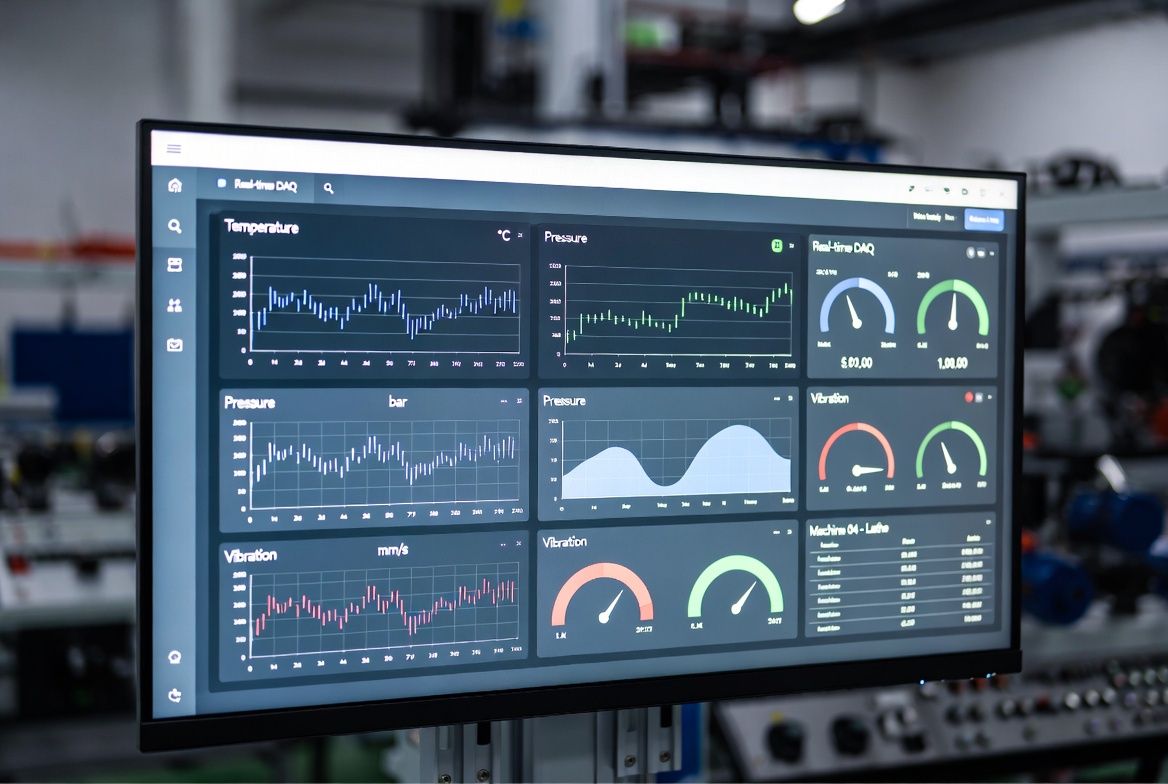
A data acquisition (DAQ) system is a set of technologies designed to capture physical variables from the environment and convert them into analyzable digital data. These variables may include temperature, pressure, vibration, current, or humidity, among many others.
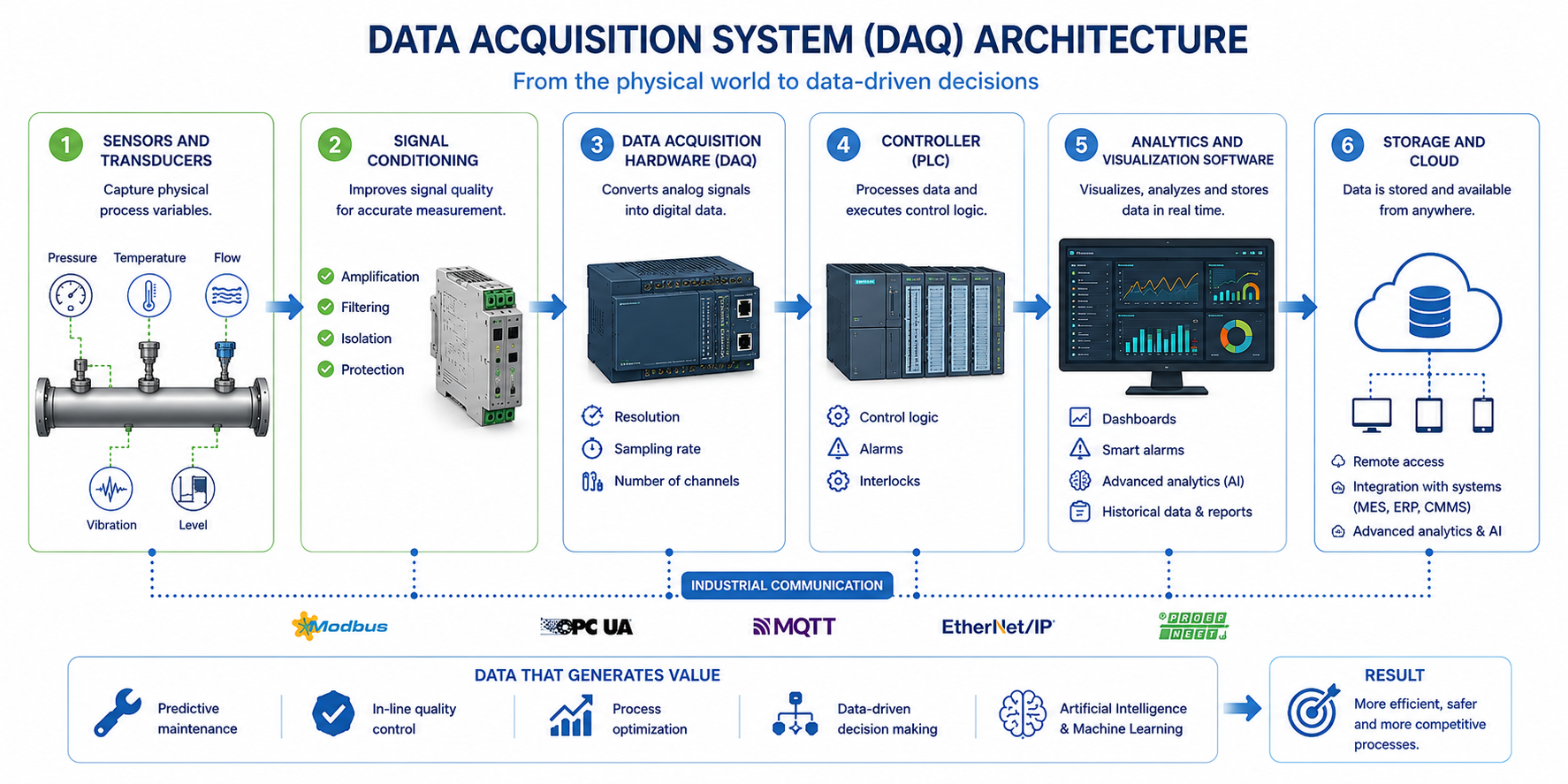
In practice, a DAQ system acts as a bridge between the physical and digital worlds. Sensors capture real-world signals, which are then conditioned, digitized, and processed through software.
Critical components of a data acquisition system for accurate measurement
For a DAQ system to work properly, all its components must be correctly selected and integrated.
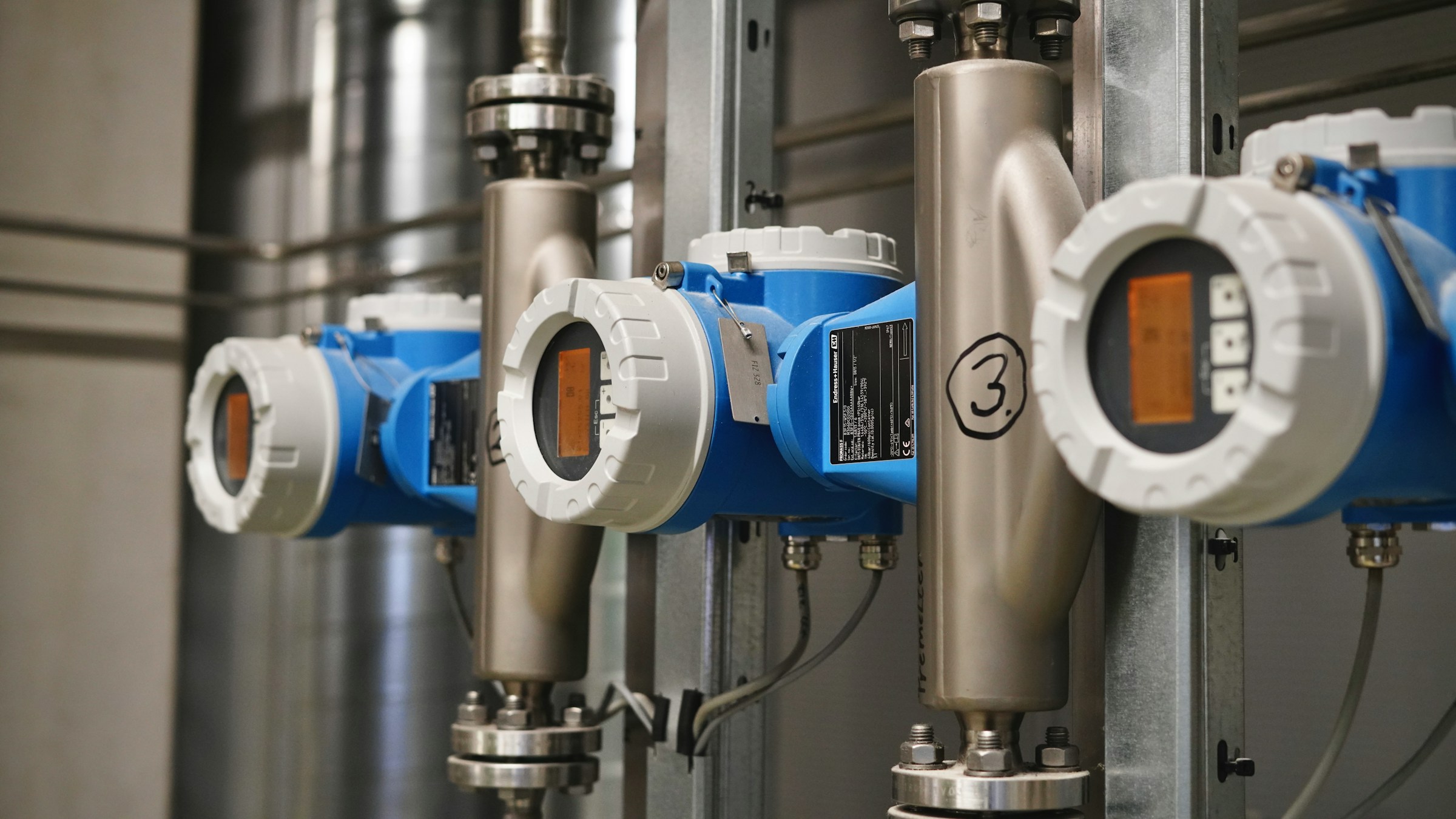
Sensors and transducers
These are responsible for capturing physical variables. Common examples include:
- Thermocouples for temperature
- Accelerometers for vibration
- Pressure or flow sensors
Signal conditioning
Captured signals are often weak or affected by noise. Therefore, amplification, filtering, and isolation are required. This step is critical, especially in industrial environments where electromagnetic interference is present.
Acquisition hardware
This is responsible for converting the analog signal into digital form. Key parameters include:
- Resolution
- Sampling rate
- Number of channels
The choice of these parameters depends directly on the type of application. For example, in a vibration monitoring system for rotating machinery, a high sampling rate is required to correctly capture frequencies associated with potential failures. However, in applications such as ambient temperature measurement, a low sampling rate is more than sufficient and avoids generating unnecessary data.
Analysis software
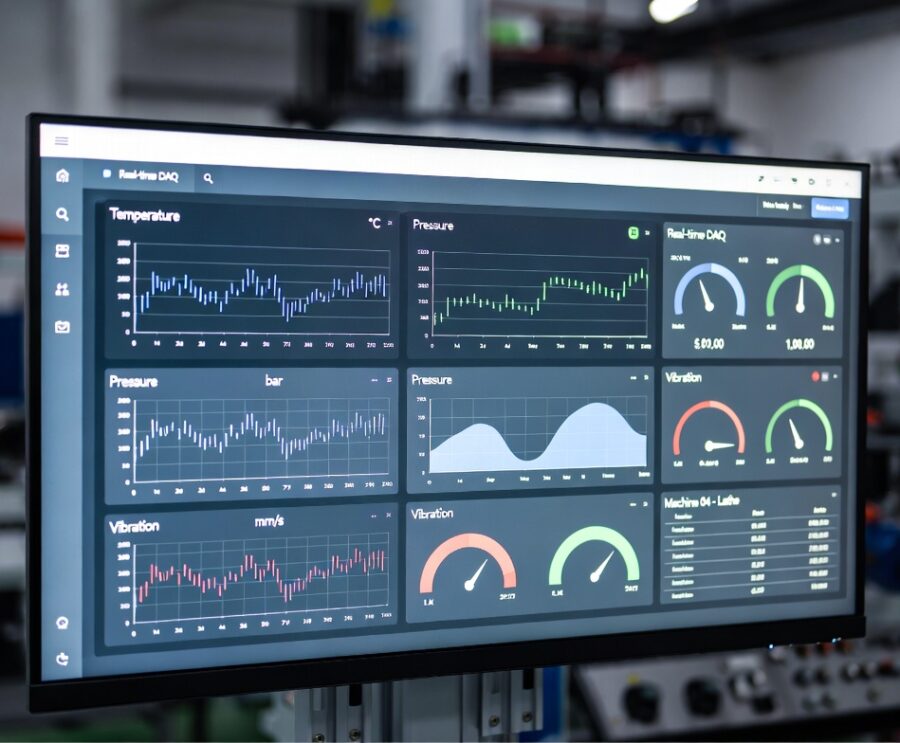
This allows data to be visualized, recorded, and analyzed. It may also include dashboards, alarms, or integration with other systems.
In modern systems, this layer is where real value is generated. Beyond simple visualization, analysis software enables:
- Pattern detection
- Smart alerts
- Integration with MES, ERP, or cloud platforms
In addition, this is where Artificial Intelligence comes into play. Thanks to machine learning models, it is possible to:
- Predict failures before they occur
- Automatically detect anomalies
- Optimize processes based on historical data
In this context, the DAQ system acts as the data source feeding these algorithms, becoming a key component in any advanced digitalization strategy.
Acquisition methods
Depending on the process and the criticality of the measurement, there are different ways to acquire data:
- Continuous acquisition: Constant data recording. Ideal for critical processes where no information can be lost.
- Event-based acquisition: Data is only recorded when a specific condition occurs, such as an anomaly.
- Periodic sampling: Data capture at defined intervals. Commonly used for slow variables such as temperature.
- Distributed acquisition: Data collection from multiple network-connected points.
Benefits of real-time monitoring with data acquisition systems
The main advantage of DAQ systems is the ability to monitor processes in real time, enabling data to be transformed into actions.
Key benefits include:
- Predictive maintenance: Enables anticipation of failures through the analysis of variables such as vibration or temperature.
- In-line quality control: By integrating vision or inspection systems, defects can be detected in real time and acted upon immediately.
- Process optimization: Data analysis helps identify inefficiencies, bottlenecks, or waste.
- Data-driven decision-making: Eliminates decisions based on assumptions and replaces them with objective information.
- Artificial Intelligence application: Collected data enables training models that automate decisions, detect anomalies, and continuously optimize processes.
How to implement it: from sensor to control panel
Implementing a DAQ system must follow a clear strategy.
- Define objectives: Determine which variables to measure and for what purpose: maintenance, quality, efficiency, etc.
- Sensor selection: Choose appropriate sensors based on accuracy, environment, and variable type.
- Signal conditioning: Essential to avoid erroneous data in industrial environments.
- Sampling rate: Must be adjusted to the signal type. Incorrect sampling can lead to information loss or data overload.
- Communication and integration: Use protocols such as MQTT or OPC UA to connect with higher-level systems or the cloud.
- Visualization: The control panel must be clear and decision-oriented.
Integration with the Industrial Internet of Things (IIoT): from plant to cloud
Modern DAQ systems are integrated into the IIoT ecosystem, enabling:
- Remote data access
- Integration with ERP and MES systems
- Advanced analytics using AI and Big Data
This turns data into a strategic business asset.
Signal conditioning: the critical filter in industrial environments
In industrial environments, signals can be affected by multiple interferences, such as electric motors, variable frequency drives, or electromagnetic noise. Without proper filtering, data may become unreliable. Therefore, this stage is key to ensuring data quality.
The importance of sampling rate: how much data is enough?
t is not only about capturing data, but doing it correctly. Although the Nyquist theorem establishes a minimum of 2x, in industrial environments a range between 2.5x and 10x is recommended to improve accuracy and transient analysis.
For example:
- Vibrations → high frequency (kHz)
- Temperature → low frequency
Poor configuration can lead to analysis errors or system overload.
ATRIA success case 1: modernization of a 25+ year-old industrial machine
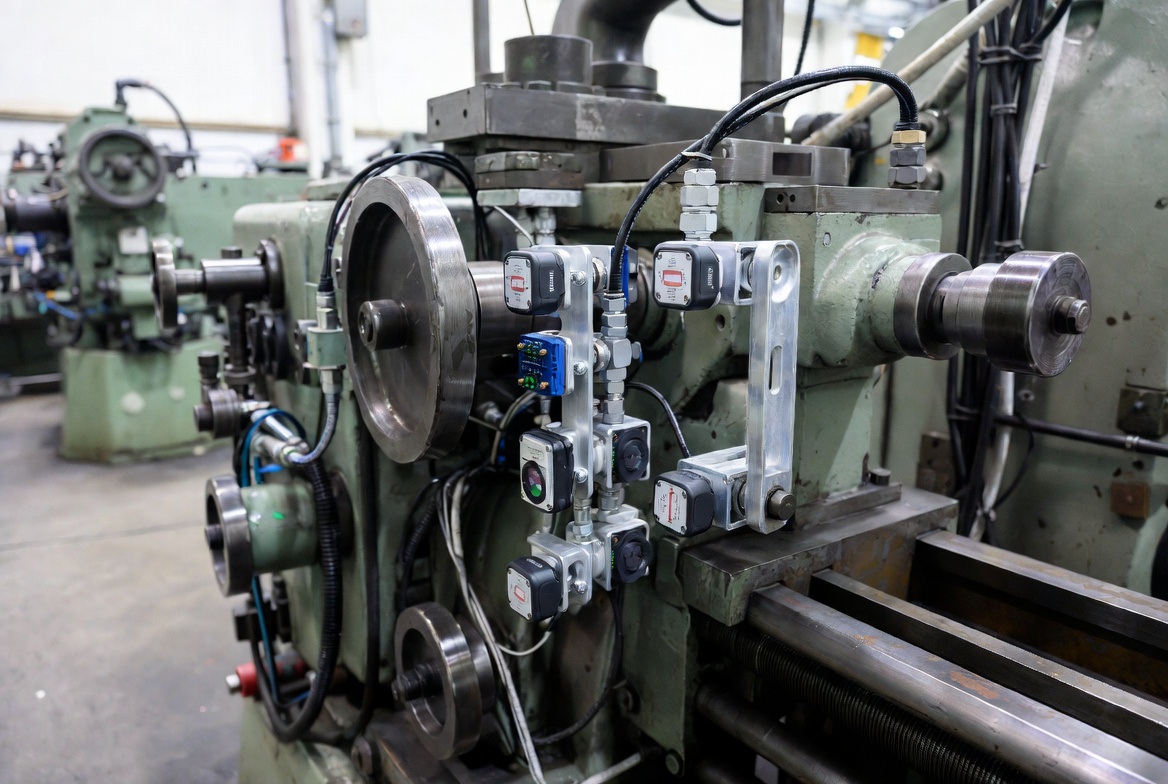
In one of the projects developed by ATRIA, work was carried out on an industrial machine more than 25 years old, whose sensing and control system had become obsolete.
The equipment had issues reading critical variables, causing unnecessary stoppages and production losses. In addition, there was no structured data acquisition system, so no real visibility of machine operation was available.
Implemented solution
The project focused on modernizing the machine while respecting its original base, adapting it to an old but functional infrastructure.
To achieve this, not only were sensors replaced, but a new data acquisition and control system was developed:
- Replacement of critical sensors with modern and reliable sensing
- Integration of a PLC-based control system
- Development of a new HMI interface for machine control
- Real-time visualization of new variables and improved reading of existing ones
A key aspect was the ability to integrate modern technology with legacy systems, maintaining what was still valid and replacing only what was necessary.
Results
- Elimination of measurement errors
- Reduction of unplanned downtime
- Greater process control and visibility
- Digitalization of a legacy machine without replacing it
This project demonstrates how, through data acquisition systems, it is possible to extend the useful life of existing machinery and adapt it to current industrial standards.
ATRIA success case 2: integration of artificial vision in a cutting industrial machine
In another project developed by ATRIA, the main objective was to implement a computer vision system capable of automatically calculating cutting parameters in an industrial machine.
The challenge was not only developing the vision system, but also integrating it with an existing cutting machine whose control system was outdated and not designed to communicate with external systems.
Implemented solution
To apply machine vision effectively, it was necessary to obtain process information that could not be extracted solely from images, such as machine states, operating conditions, or trigger signals.
The problem was that this information was only available internally in the machine, with no access or communication interface.
To solve this, a complete solution based on data acquisition systems was developed:
- Installation of sensors to capture key process variables
- Development of a DAQ system to structure and digitize the data
- Integration of a PLC as a communication interface with the cutting machine
- Synchronization via triggers between the machine and the vision system
- Development of the machine vision system for calculating cutting parameters
This allowed the vision system to work in coordination with the machine, using both visual information and operational data required to execute the process correctly.
In addition, all this information began to be stored in the company’s cloud, enabling historical process data for the first time.
Results
- Automation of cutting parameter calculation
- Integration of machine vision into a previously non-connected machine
- Precise synchronization between physical process and vision system
- Data capture and cloud storage of process information
- Improved cutting accuracy and repeatability
This case demonstrates how data acquisition systems enable advanced technologies such as machine vision, even in environments with legacy industrial machinery not originally designed for it.
Conclusion
Data acquisition systems have become a key component in industrial digitalization. Beyond simple data collection, they enable process transformation, improved decision-making, and lay the foundation for advanced technologies such as Artificial Intelligence.
As seen in the success cases, their value is not limited to new or highly automated environments. DAQ systems also allow legacy machinery to be modernized, new technologies to be integrated into outdated equipment, and information to be extracted that was previously simply unavailable.
From improving maintenance and quality to optimizing production processes, having reliable and accessible data is the first step toward a more efficient, connected, and competitive industry.
At ATRIA, we work precisely at that point: helping companies capture, understand, and leverage their data, adapting to each environment and each level of technological maturity.
Do you want to start transforming your data into value? Get in touch with us!