Technologies
10 March 2026
Biogas analysis, key parameters and examples
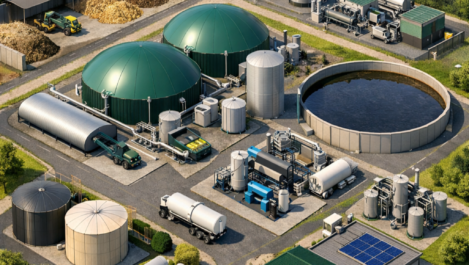
In today’s post, we explain in detail the analysis of biogas samples carried out by ATRIA.

Due to the use of various materials, the variety of product types, and the complexity of their manufacture, shoemaking remains largely manual. However, with the latest advances and the emergence of new technologies with greater versatility, part of this sector has begun its transition towards automation and Industry 4.0 through the use of various technologies.
Using collaborative robots for shoemaking has long been a highly complex task. The different types of materials that must be handled and all the possible designs to be used, made the configuration and adjustment of the robots very difficult. Nowadays, thanks to the appearance of more accurate and affordable sensors, this type of task has been greatly facilitated, being able to use this type of robots in production lines in combination with manual assembly.
Due to the high precision required for the assembly of footwear, it is necessary to use other technologies together with collaborative robotics to guarantee a good result. This is the case, for example, of Computer Vision, with which it is possible to detect the position of the object, so that the robot can act precisely on it. It is also of great importance the use of various sensors that allow measuring various parameters such as the force exerted, to ensure that the materials being handled are treated correctly.In addition to the manufacture of footwear or the preparation of its materials, it is also possible to use collaborative robots for other types of auxiliary tasks such as, for example, packaging or maintenance of the work area.
Another technology that has a great future not only in the footwear industry but in the entire textile industry in general, is Augmented Reality. This technology can be used in various parts of the design and production process, being able to facilitate tasks.
In the design process it can be used to validate the products before they are manufactured, being able to give a clearer image of the final result, this can be very useful since it saves time and materials.[/column]In the same way, it can be used in the manufacturing process itself to facilitate the work of the operators, being able, for example, to indicate the different steps to follow in the process. This also simplifies the learning process for new employees.
Augmented Reality in this area can be used for the end user and the stores in charge of selling the product. Making use of this technology to try on shoes or other types of clothing is something that is already being used and that is very useful for online stores.

One of the technologies that is impacting the footwear industry the most is that of 3D printers. Using this tool has greatly facilitated several of the design and manufacturing processes.
On the one hand, this technology is used to a large extent for the development of prototypes with which to validate the design.[/column]What previously required a manufacturing process can now be automated, reducing resource expenditure and manufacturing time. This, in turn, enables a greater number of designs and materials to be tested.
On the other hand, although to a lesser extent, 3D printing has also begun to be used in production. Its use allows not only the automation of the process, but also allows saving materials by not requiring such complex manufacturing. In addition, thanks to the digitization of the different designs, their modifications are greatly facilitated as they can be shared practically instantaneously.
The move to industry 4.0 and the use of new technologies is a fact, to which even the most traditional sectors have had to advance. New technologies not only make it possible to improve existing processes, but also to find new use cases with which to provide a better service as well as various benefits against which it is impossible to compete with traditional methods:
Do you want to apply Industry 4.0 Technologies in any of your Projects? Contact us!

Your success is our goal. We want to be your partner in the development of your projects, leveraging the power of innovation, flexibility, and the trust we provide. Together, we make a difference through new technologies.
Contact us and let’s build the future together!