Technology has come a long way in recent years and, among other things, has made it possible to optimize and improve production processes and has brought improvements in safety at work. One of the great challenges facing robotics today is to improve work environments and achieve safe environments. In general, the automation of industrial processes allows operators to work more safely, improves working conditions and removes them from hazardous environments.
In this blog we will see how collaborative robotics allows us to perform dangerous tasks in an automated way. This has achieved that these processes are carried out in a faster and safer way, greatly reducing the risks for operators.
What are collaborative robots?
Collaborative robots, also known as ‘cobots’, were created to work together with operators in the same workplace, so that it was possible to combine the advantages that each one brings.
Collaborative robots are widely deployed in factories of all kinds to perform different tasks. They are a key element of digitization and Industry 4.0. Collaborative robots allow automating tedious tasks that do not add value to the product. To put it in some way, collaborative robots play the role of assistant to the worker. They not only perform traditional robotic tasks but also add different sensors, such as cameras, temperature sensors, force sensors etc. much more complex tasks can be carried out and that until now it was unthinkable to do in an automated way. It means, robots get smarter.
Advantages of collaborative robots
Collaborative robots have great advantages for which they can be used in all kinds of environments and for other tasks that industrial robotics cannot solve.
- They do not need complicated electrical installations and can be connected to practically any outlet. They are easy and intuitive to assemble.
- They are very flexible and can be relocated to new tasks without modifying production schedules. They also allow you to reuse programs and automate several tasks on the same production line.
- Cobot programming is very intuitive and easy to implement.
- Cobots can be used in all types of industries and environments. In addition, they support a multitude of types of end effectors that adapt to each task efficiently and quickly.
- They are safe and allow automating processes and heavy tasks that cause injuries and do not add value to the process.
As you can see, collaborative robots have advantages that make them suitable for automating many tasks. Among them the tasks that are dangerous and tedious for people.
Collaborative robots and dangerous tasks
Collaborative robots can take on tasks that are potentially dangerous and put people at risk, be it from handling dangerous parts, working in harsh environments, or injuries caused by poor ergonomics. Robotics has great potential in this regard, since it allows increasing security. Robots can carry out repetitive and dangerous tasks, which cannot be carried out by humans or involve high risk. They also allow you to perform tasks with limited space or in extreme environments.
There are still many challenges in dangerous environments that generate the need to be automated, or to be done autonomously due to the risk they entail. For this reason, robotic systems are developed, both fully autonomous and tele-operated.
In recent years, the advancement of robots has been based on the development of intelligent sensors, artificial intelligence and modular mechanical systems. Therefore, there are fully autonomous robotic systems that react to external stimuli, avoiding obstacles, correcting trajectories, etc. and that they can work in dangerous environments such as high temperature areas or handling dangerous objects. For example, here you can see a project in which the handling of blades was a very high risk for the operator. On the other hand, there are tele-operated systems that deliver the control of a robot (slave) to a person through haptic input devices (master). Currently, there are simulation systems and virtual reality that can facilitate the preparation of specific mechatronic tools and robotic interventions, including recovery scenarios and failure analysis mode and that allow training people who control this type of systems. An example of tele-operated robots could be drones or robots used in the medical field to perform operations.
Autonomous robots in dangerous environments
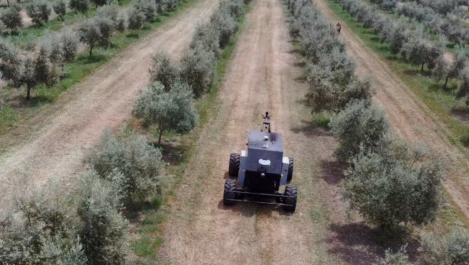
In addition to collaborative robots, we would like to tell you about fully autonomous robots. In many sectors such as energy where working in hazardous environments, such as nuclear power plants or petroleum platform, it is necessary to carry out repairs and maintenance with tasks that are a potential danger to workers. In other cases, operations must be carried out in hard-to-reach places that cannot be accessed by people. For this, autonomous robots with very diverse configurations are used that are able to move and move in dangerous environments and carry out tasks that would be a risk for workers. These robots are capable of performing repair and maintenance tasks with a high degree of precision and flexibility. One of the most famous developments of this type is Spot, the robotic dog from Boston Dynamics, which has already been used in real environments. Spot is designed to be used in potentially hazardous environments, such as conducting inspections at pump alert locations or a chemical gas leak.
 In short, we have seen that advances in robotics have made it possible to automate tasks that pose a risk to people, also allowing work in dangerous environments. This technology is likely to become more accurate and more accessible in the future.
Do you want to apply robotics in dangerous environments in any of your Projects? Contact us!