Technologies
3 March 2026
Artificial intelligence in factories
We explain the impact of implementing artificial intelligence in factories, along with its multiple applications, benefits, and challenges.

We begin 2026 with the feeling that we have witnessed something important. It is no coincidence that UNESCO declared 2025 the International Year of Quantum Science and Technology: it has been a year of milestones that, just a decade ago, seemed distant.
Quantum computing is not merely another step in chip miniaturization or an increase in processing speed; it represents a conceptual leap towards a new paradigm. And 2025 has been the year in which this field has shown clear signs of maturity.
In today’s post, we review the most significant advances of the past year, explore the challenges that still remain, and reflect on the true potential of quantum computers.

If there is a common thread running through the achievements of 2025, it is quantum error correction. For decades, this has been the major obstacle: qubits are extremely fragile, and any interaction with their environment destroys the information. This year, we have seen convincing demonstrations that this problem has a solution.
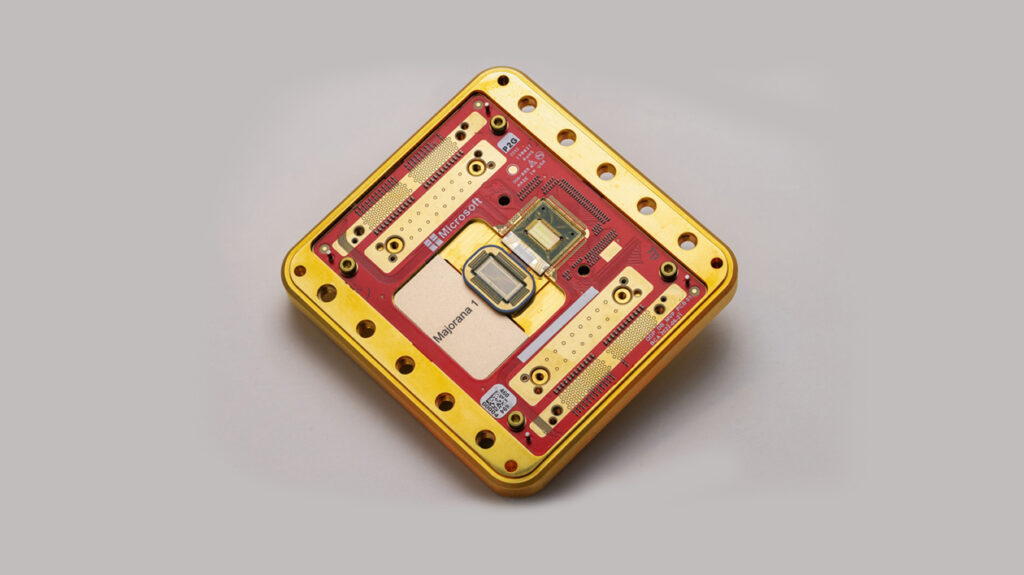
These advances, with such different approaches, highlight a key reality: there is still no consensus on which technology will prevail. This leads us directly to analyze the central element of this diversity: the qubit itself.
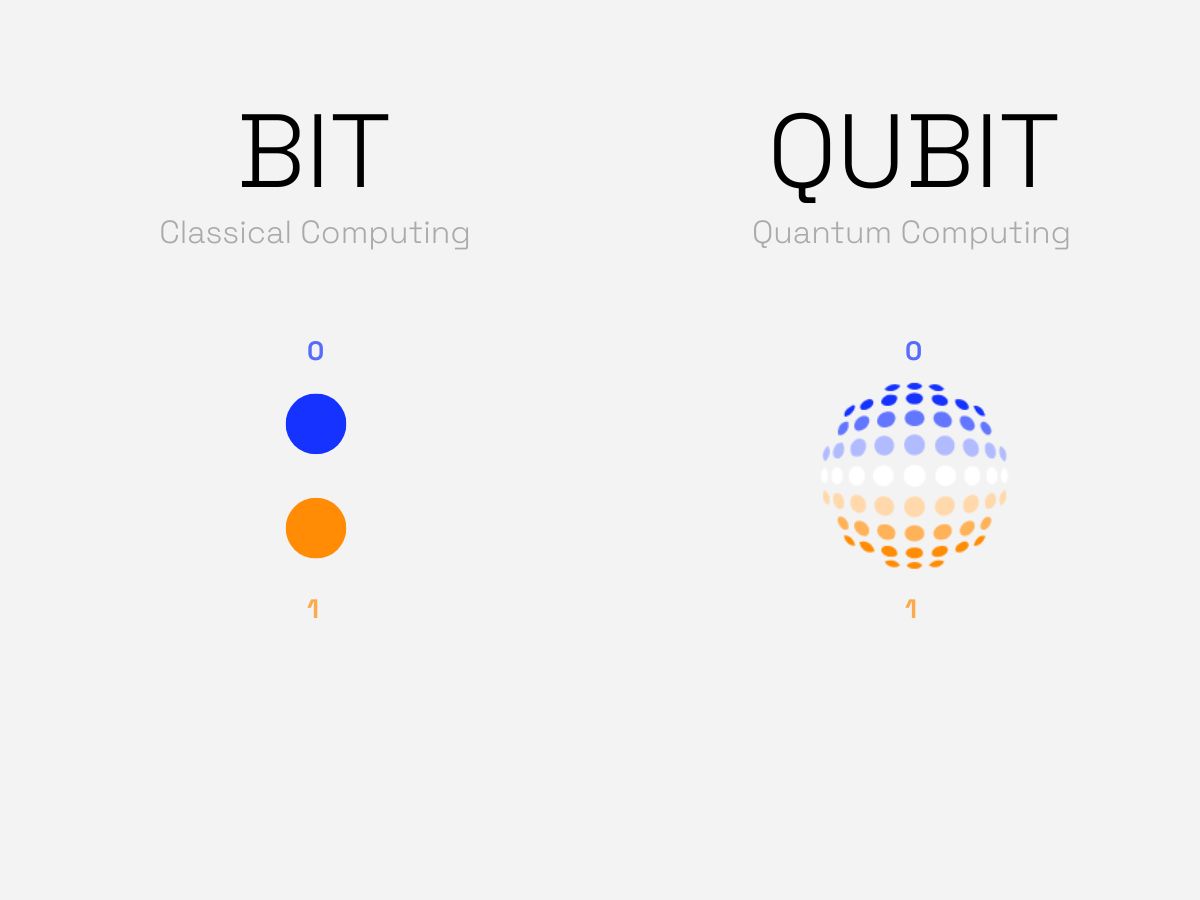
Unlike the classical binary digit (or bit), which represents a 0 or a 1, the qubit exploits quantum mechanics to exist in a superposition of multiple states, allowing it to explore a much larger information space. We discussed the conceptual differences between classical and quantum computing in a previous blog post, but here we will focus on the range of possibilities for qubit design.
The great challenge is that maintaining this delicate superposition of states is extremely difficult. Qubits are incredibly fragile, and any unwanted interaction with their environment can destroy the information. This inherent fragility is the main reason why, to this day, there is no clear consensus on which is the “best” physical technology for building reliable and scalable qubits.
There are many promising approaches, such as superconducting qubits, trapped ions, photonic qubits, neutral atoms, or quantum dots, among others. The differences between them lie in the physical phenomenon that governs the qubit, which in turn changes how information is encoded and how it is measured.
We could say that we are in a phase similar to that of classical computing in the late 1950s, when it transitioned from vacuum tubes to the transistor. We are still searching for the dominant “quantum transistor,” but the race to find the ideal platform that combines sturdiness, scalability, and performance remains wide open.
We have seen that building quantum computers is an enormous challenge and that multiple technologies are competing. But what is all this effort for? A quantum computer is a tool with revolutionary potential, promising to unlock problems that are currently unsolvable. These machines find their natural fit in tasks that are intrinsically quantum. The most obvious is the simulation of other quantum systems, such as the exact behavior of complex molecules or the properties of new materials. This offers an unprecedented pathway for computational chemistry, materials science, and drug discovery.
Classical computers must approximate these interactions through numerical simulation of the physical equations involved. In such systems, complexity grows exponentially as the number of interactions between particles increases. This makes simulations feasible for small systems, but they quickly become computationally intractable as size increases. The advantage of a quantum computer is that, being a quantum system itself, it does not need to simulate these equations; instead, by obeying the same physical laws as the systems being studied, it represents this complexity naturally, without the additional cost incurred in classical computing.
This potential extends to other areas where complexity exceeds classical capabilities, such as cryptography (the famous Shor’s algorithm) or logistics problems, where the search spaces are also unmanageable for classical systems without approximations.
However, it is just as important to understand what quantum computers are not for. Despite their potential in areas such as simulation or optimization, quantum computers are not designed to outperform classical ones in the vast majority of computational tasks. Their architecture and operating principles are fundamentally different and are not well suited to the Boolean logic and structured data processing used by our current devices. When we talk about quantum supremacy or quantum advantage, it means that a quantum system has managed to outperform the classical implementation of a specific problem.
That said, it is not expected that quantum supremacy will be achieved across all areas. Quantum computing is a niche tool, and while that niche may be revolutionary in specific fields, you will still need a classical computer or server for almost everything else.
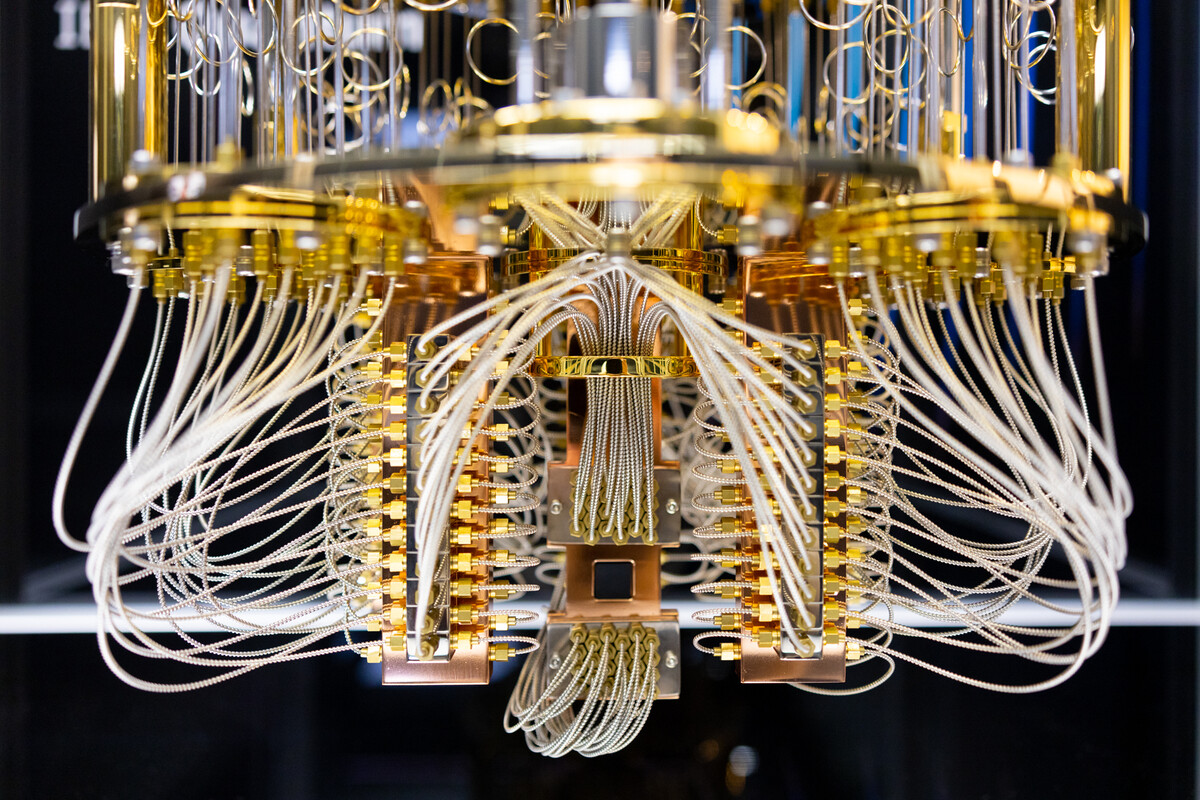
We are at a historic moment comparable to the dawn of the digital revolution. Quantum computing represents, more than an evolution, a reinvention of computational possibilities. The race to establish the dominant qubit technology remains open, and each advance brings us closer to a horizon where problems that are unsolvable today may find answers.
What can we expect from 2026? If roadmaps are met, we will see the first systems with quantum advantage in real commercial applications, beyond laboratory benchmarks. IBM points to the end of the year; Google and Microsoft continue to move forward along their respective paths. Europe, with initiatives such as that of the BSC, is working to avoid falling behind.
However, the future will be neither exclusively quantum nor classical, but rather a symbiosis in which each technology contributes what it does best. And that future, for the first time, is beginning to feel close.
Do you have questions about quantum computing or its real-world applications? Contact us!

Your success is our goal. We want to be your partner in the development of your projects, leveraging the power of innovation, flexibility, and the trust we provide. Together, we make a difference through new technologies.
Contact us and let’s build the future together!