Industries try to automate their production processes as much as possible. In order to achieve greater efficiency and product quality. However, do we know exactly what automation is? And to what extent can its application be beneficial? We tell you about it in our post today along with 7 benefits of industrial automation.
At ATRIA, we offer comprehensive industrial automation solutions, ranging from advanced robotics implementation to artificial vision systems and information management. Our personalized approach allows us to adapt the most innovative technologies to each client’s specific needs, improving efficiency, quality, and safety in their production processes. Contact us!
What is industrial automation
Automation consists of the use of technologies and methodologies with the aim of automatically performing all those tasks that are repetitive without the need, or with very little, human intervention. In addition to providing all the necessary information so that the systems can self-manage and be accessible if external intervention is necessary.
Due to the ease of being implemented in the most repetitive processes, one of the best-known forms of automation is the use of robotics in production lines. However, many other technologies such as PLCs or Databases are used to manage information, and in recent years with the rise of Industry 4.0, the use of Computer Vision and Deep Learning.
Types of industrial automation
Automation encompasses a large number of technologies and methodologies, using what can be implemented in the production process. Due to this reason, it is a changing field in which new technologies can be used as they are improved by time.
Some of the most commonly used today are:
Robotics: Surely one of the best known. It consists, in most cases, in the use of robots in production lines to carry out assembly or picking tasks. In recent years, the use of collaborative robots has become popular, which thanks to its smaller size and security measures can be used near or with operators without danger. Computer Vision: Through the use of vision cameras, images are taken from which information is extracted. This information can be of various kinds, from detecting defects in pieces, to determining the actions to be taken based on the object found, or simply reading codes. It is also common to use Deep Learning for the detection or classification of captured images.

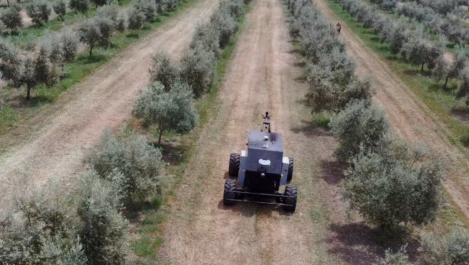
AGVs: The use of autonomous vehicles is common today, especially for use in transporting material or maintenance. Its use in combination with robotic arms and computer vision is common.
Information Management: Another important point of automation is being able to carry out communications between the different teams as well as being able to store and access said information easily. For this, it is common to use databases that allow keeping a record of the elements and how they are related to each other.
 These are just some of the possible technologies used in automation. It should be noted that in most cases it is not enough to apply only one of them to automate a process. So it is necessary to use a combination of 2 or more of the mentioned technologies.
7 benefits of industrial automation
Although we have already mentioned what automation consists of and what methods it uses, is it worth applying automation? Next, we explain 7 benefits of applying automation to an industrial process.
Production improvement
Automating tasks allows not only greater efficiency in the process by being able to perform various tasks more quickly, but also production can be maintained 24 hours a day.
Higher quality
Automating tasks allows not only greater efficiency in the process by being able to perform various tasks more quickly, but also production can be maintained 24 hours a day.
Cost savings
Although automation can involve an initial investment, it also allows great savings. This is due to several reasons, such as fewer errors, which makes the product more cost-effective, and decreases the amount of waste produced by errors.
Information
An automated system allows the collection and storage of a large amount of information regarding the process. This makes it easy to perform analyzes that can help further improve the process and make it more efficient.
By automating the most difficult tasks, people are prevented from being put into dangerous situations. In addition, automated systems have great security measures that prevent accidents from occurring.
Flexibility
By having greater control of the systems, they can more easily adapt to different situations. As a greater amount of work, or the introduction of new elements in the production.
Less supervision
Once the system is validated, the appearance of problems in it is very rare, and in case of situations, the systems are prepared to notify them. For this reason they need less supervision of their operation.
People or machines?
As explained, the automation of industrial tasks can bring many benefits. There will continue to be tasks that can only be performed by people due to their complexity. But in the most routine tasks, the application of automation in any of its versions can offer great benefits and advantages for everyone.
Do you want to apply Automation in any of your Projects? Contact us!