Functionalization
We can change the characteristics of a material in a controlled way, improving its performance and broadening its areas of application.

The current film does not have the capacity to protect the packaged product from the light to which it is subjected.
Improve the light filtering properties of the current film. To this end, the following specific objectives were addressed:
Firstly, the spectrum of light that the current film, made of low-density polyethylene, is capable of filtering was studied. The objective of this study was to determine the wavelengths that pass through the material and damage the packaged product.
Based on this information, various additives and pigments were selected to be incorporated into low-density polyethylene in order to improve its light-filtering properties. In the case of the additives, their function was aimed at improving the filtering of the ultraviolet range, while the pigments focused on improving the filtering of visible light.
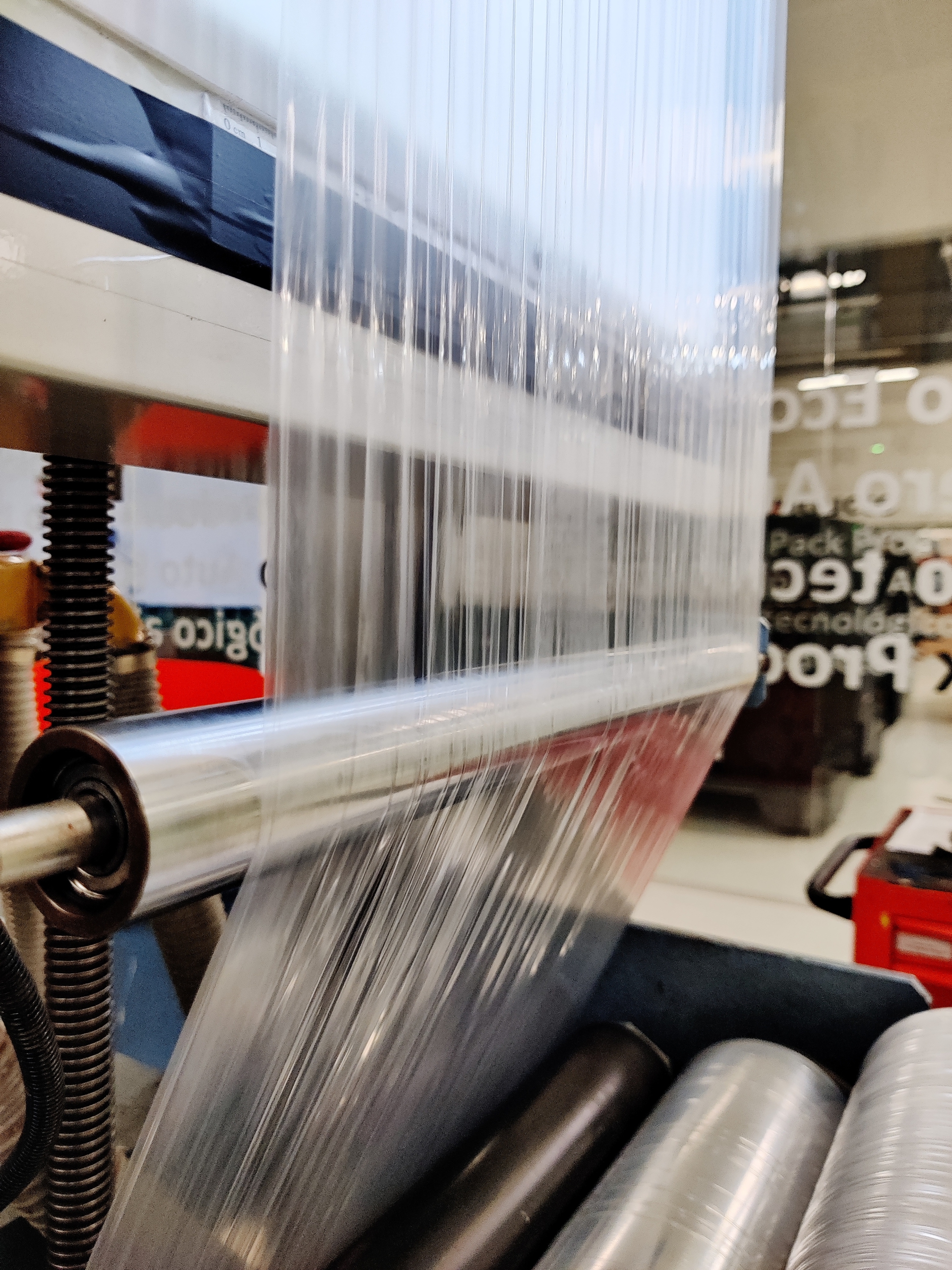
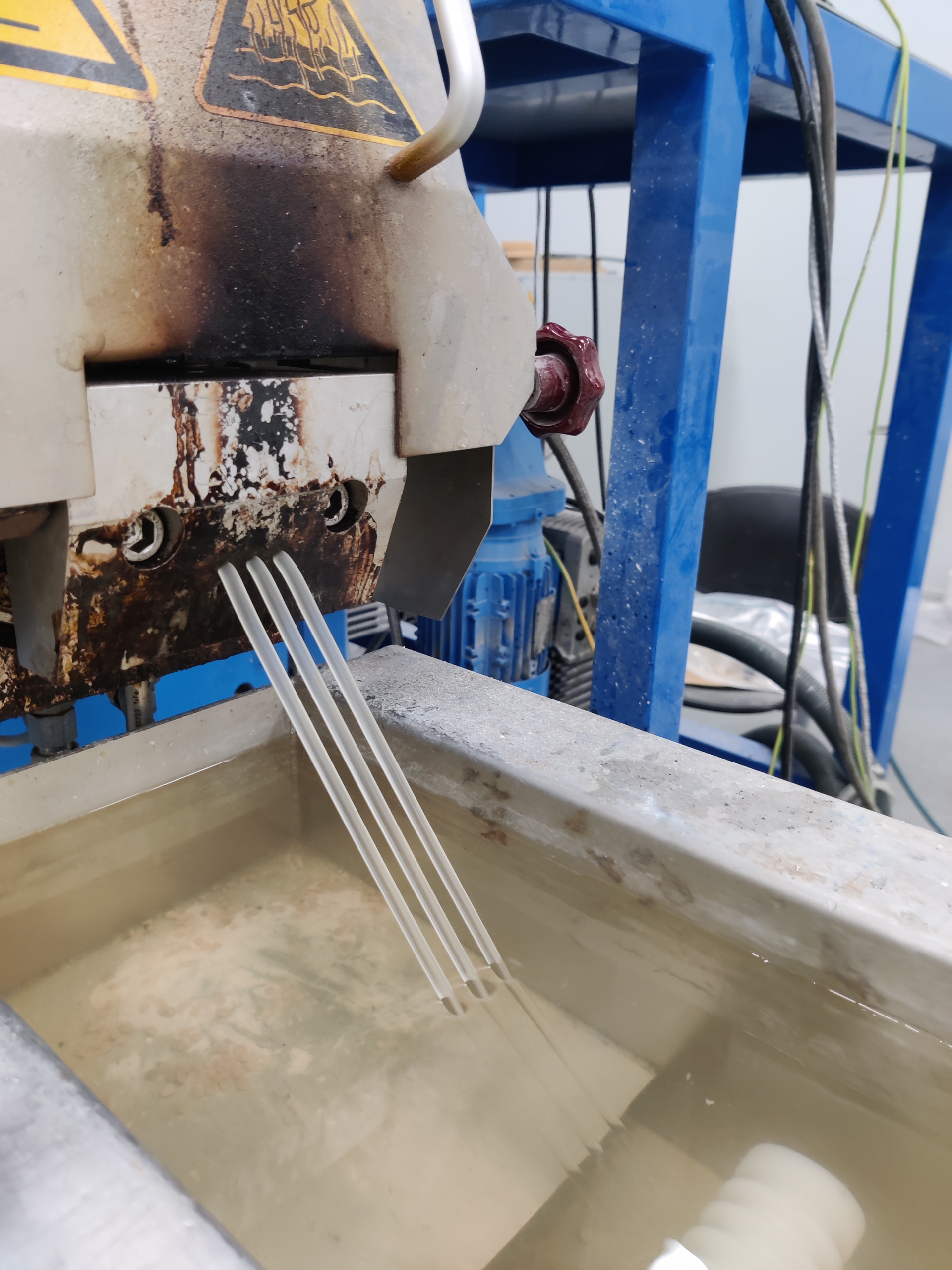
To incorporate the additives and pigments into the low-density polyethylene, a double-thread extruder was used, with which different masterbatch (granules) could be prepared for each of the proposed solutions. Both the concentration of additive and pigment incorporated as well as the combination of both solutions were studied.Next, using a semi-industrial blower, 10 meters of prototype film were prepared with each of the solutions proposed in each masterbatch. During the manufacturing process of the films, the thickness was optimized, to adjust it to that of the current film, and the width.
Finally, tests were carried out to characterize the improvement of light filtering in the prototype films with respect to the reference film (current polyethylene). In addition, the color variation of the film and other specific customer requirements were characterized.

Your success is our goal. We want to be your partner in the development of your projects, leveraging the power of innovation, flexibility, and the trust we provide. Together, we make a difference through new technologies.
Contact us and let’s build the future together!
We are a team of experts passionate about industrial innovation, committed to excellence, and the success of our clients.


Subscribe to our newsletter, and we’ll send you all the content that interests you directly to your email.