
Technologies
10 March 2026
Biogas analysis, key parameters and examples
In today’s post, we explain in detail the analysis of biogas samples carried out by ATRIA.

In modern elite sport, the difference between glory and falling just short of the podium can be measured in mere thousandths of a second. Medals no longer depend solely on talent or physical preparation—technology has become a decisive factor.
The Winter Olympic Games are a particularly clear example of this evolution. In these competitions, the interaction between materials, surfaces, and environmental conditions defines athletes’ performance. The physics of friction, the microstructure of ice, or the aerodynamics of textiles can determine the final speed of a downhill run or the stability in a turn.
In today’s post, we explore how technology and materials engineering influence athlete performance in Winter Olympic Sports. Don’t miss it!

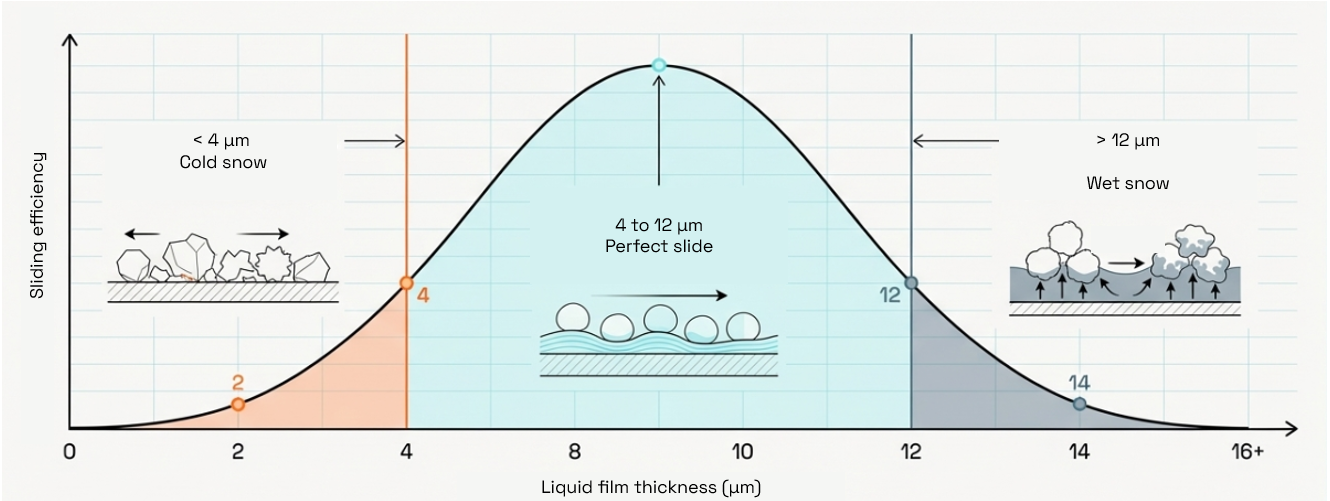
Contrary to what is often believed, skis do not glide directly over solid snow. In reality, they slide over a microscopic layer of liquid water generated by the heat of friction between the ski base and snow crystals.
Optimal performance depends on the thickness of this water film. If it is too thin—something common in very cold snow—the crystals act like an abrasive surface that slows movement. If it is too thick, as occurs when the snow is wet, a capillary suction effect appears that also reduces speed. Optimal glide occurs when this liquid film reaches only a few micrometers in thickness, typically in the range of 4 to 12 µm.
To control this phenomenon, modern ski bases are made from ultra-high-molecular-weight polyethylene (UHMWPE), a highly hydrophobic material that repels water. However, the material alone is not enough. Technicians also engrave microstructures into the surface through stone grinding processes. In wet snow, these structures act as drainage channels that break suction; in dry snow, they are much finer to take advantage of the limited lubrication available, making it possible to avoid the use of fluorinated waxes containing PFAS that are harmful to the environment.
For most people, ice is simply frozen water. On Olympic tracks, it is much more than that: it is a material with adjustable properties depending on its chemical composition and freezing process.
Specialized technicians control the amount of total dissolved solids (TDS) in the water, as well as hardness, flexibility, and other physical parameters to adapt the ice to each discipline. Extremely pure and rigid ice allows curling stones to slide without damaging the surface, while in figure skating a more flexible ice surface helps absorb impacts and facilitates jumps and spins with controlled grip.
Even the color of the ice is optimized through the addition of titanium dioxide to achieve a bright white that increases visual contrast, improving the visibility of track markings for athletes and cameras.
Protection and visual clarity are critical factors in alpine and speed sports. Modern goggles and visors are designed with lenses that block UV rays, incorporate anti-fog treatments and polarization to reduce glare, and can automatically adjust tint depending on lighting conditions.

To maximize grip on ice, athletes use footwear equipped with plates that can contain more than 250 tiny spikes per foot. Each spike must penetrate enough to provide traction, but not so deeply that it slows movement.
The arrival of additive manufacturing (3D printing) has made it possible to customize the geometry and distribution of each spike according to the athlete’s biomechanics. This may seem like a subtle improvement, but in thousandths of a second it can make the difference between several finishing positions.
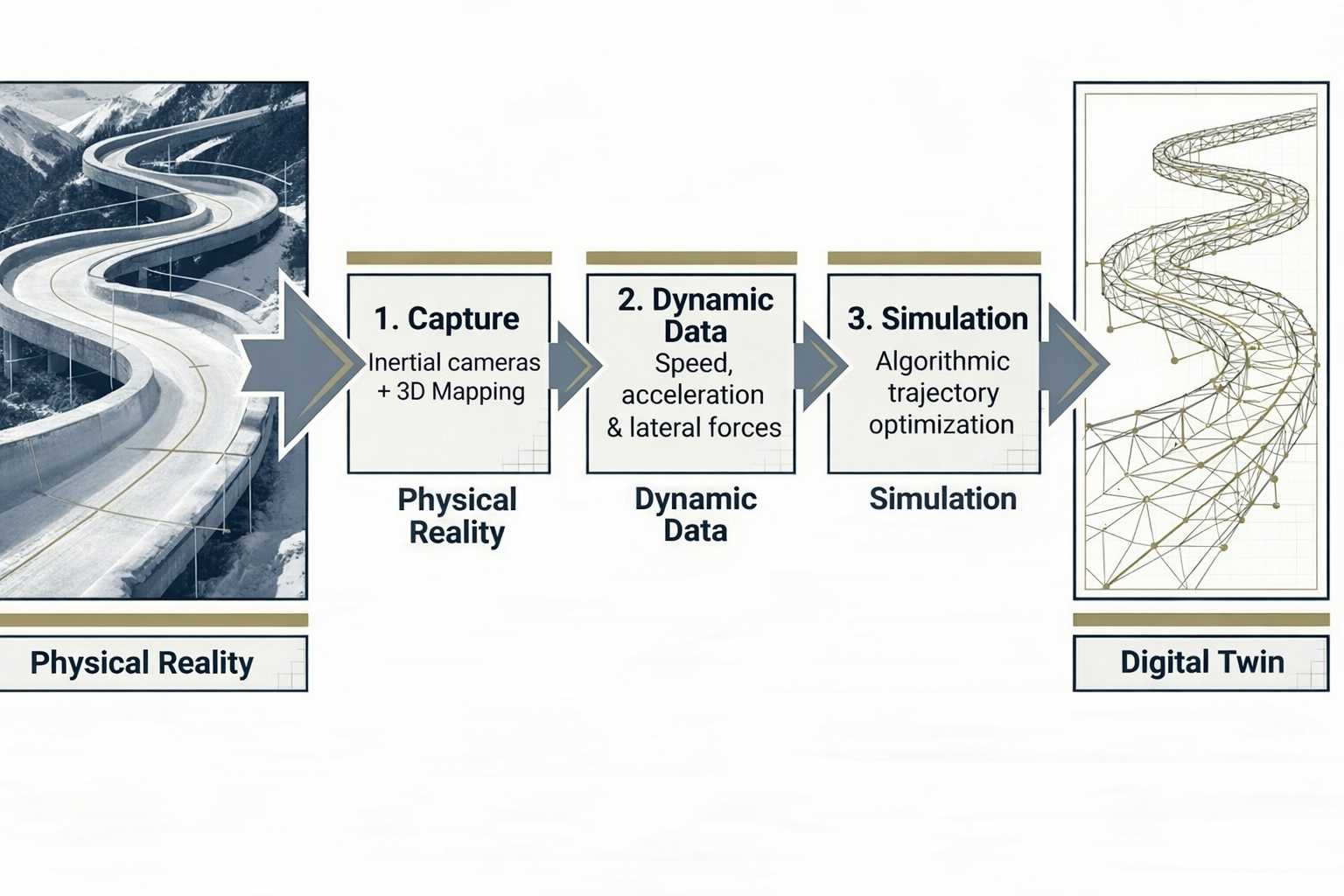
Preparation is not limited to physical equipment. Increasingly, technical teams create digital twins of Olympic tracks using cameras with inertial sensors, three-dimensional mapping systems, and dynamic data such as speed, acceleration, and lateral forces.
These replicas allow teams to simulate trajectories, forces, and strategies before the track even physically exists, accelerating learning and the optimization of each run.
Next-generation competition suits are not simply tight-fitting; they are designed to manipulate airflow, incorporating microstructures that reduce aerodynamic drag.
In addition, certain advanced textiles incorporate phase-change materials that, in extreme environments where temperatures can drop below −20 °C, help maintain stable muscle temperature and improve athlete performance.
Research that drives high-performance sport often ends up transferring to other sectors. Stronger composite materials, smart technical textiles, or surfaces with optimized tribological properties are examples of developments that eventually find applications in industry, energy, or mobility.
At ATRIA, we work precisely at this intersection of materials science, engineering, and technological innovation, helping transform advanced research into practical solutions for different industrial sectors.
Would you like to learn how to implement materials science and technological innovation in your business? Contact us!

Your success is our goal. We want to be your partner in the development of your projects, leveraging the power of innovation, flexibility, and the trust we provide. Together, we make a difference through new technologies.
Contact us and let’s build the future together!