Technologies
24 March 2026
Computer vision in the food industry
We explain how computer vision is transforming the food industry and improving the quality, safety, and efficiency of said industry.
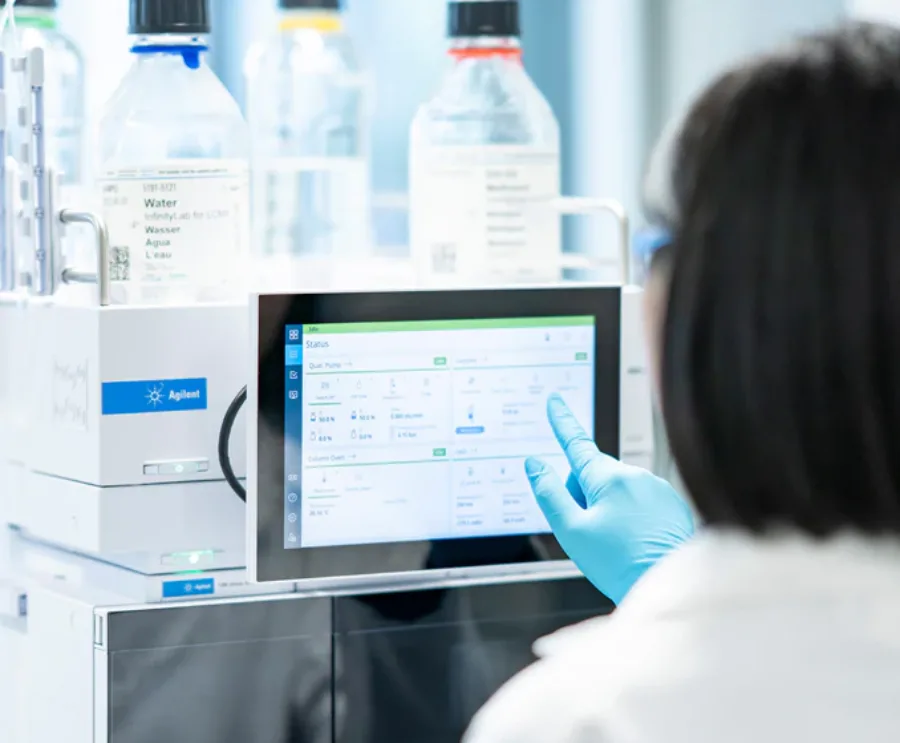
In the field of new materials research, it is essential to have analytical techniques that provide precise information about complex mixtures that define the quality of a product formulation intended to stand out in the market. For this reason, the availability of separation and analytical detection techniques for this type of mixture is of great importance, such as HPLC Analysis or High Performance Liquid Chromatography (HPLC).
In this article, we will explain in detail HPLC Analysis, one of the most interesting analytical characterization tests that we use in our projects.
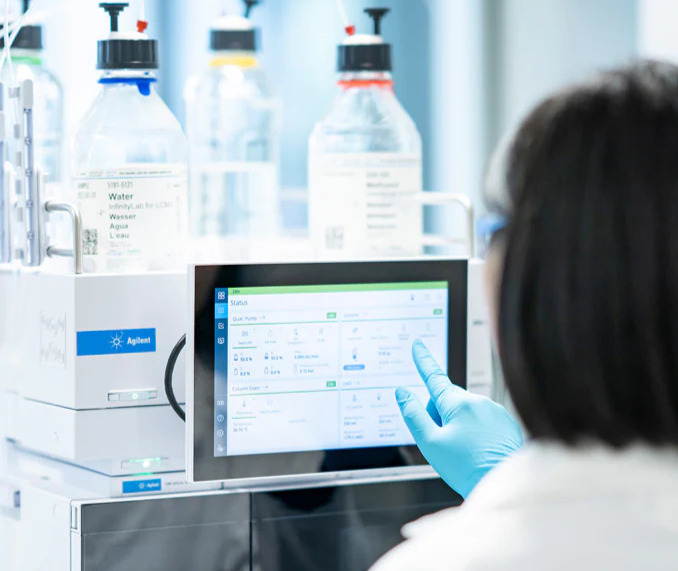
High Performance Liquid Chromatography, also known as High Pressure Liquid Chromatography (HPLC), is an analytical technique that enables the separation of complex mixtures. Its basic principle is the same as that of conventional liquid chromatography: the sample is introduced into a tube (called a chromatography column), which is filled with porous particles (known as the stationary phase) that interact physically and/or chemically with the components of the sample, separating them.
The separated components are collected at the outlet of the column and identified using an external measurement technique, such as a spectrophotometer that measures color intensity, or another device capable of quantifying their amount.
As mentioned above, the operating principle of HPLC Analysis is the same as that of liquid chromatography, with the difference that HPLC offers higher speed, efficiency, and sensitivity.
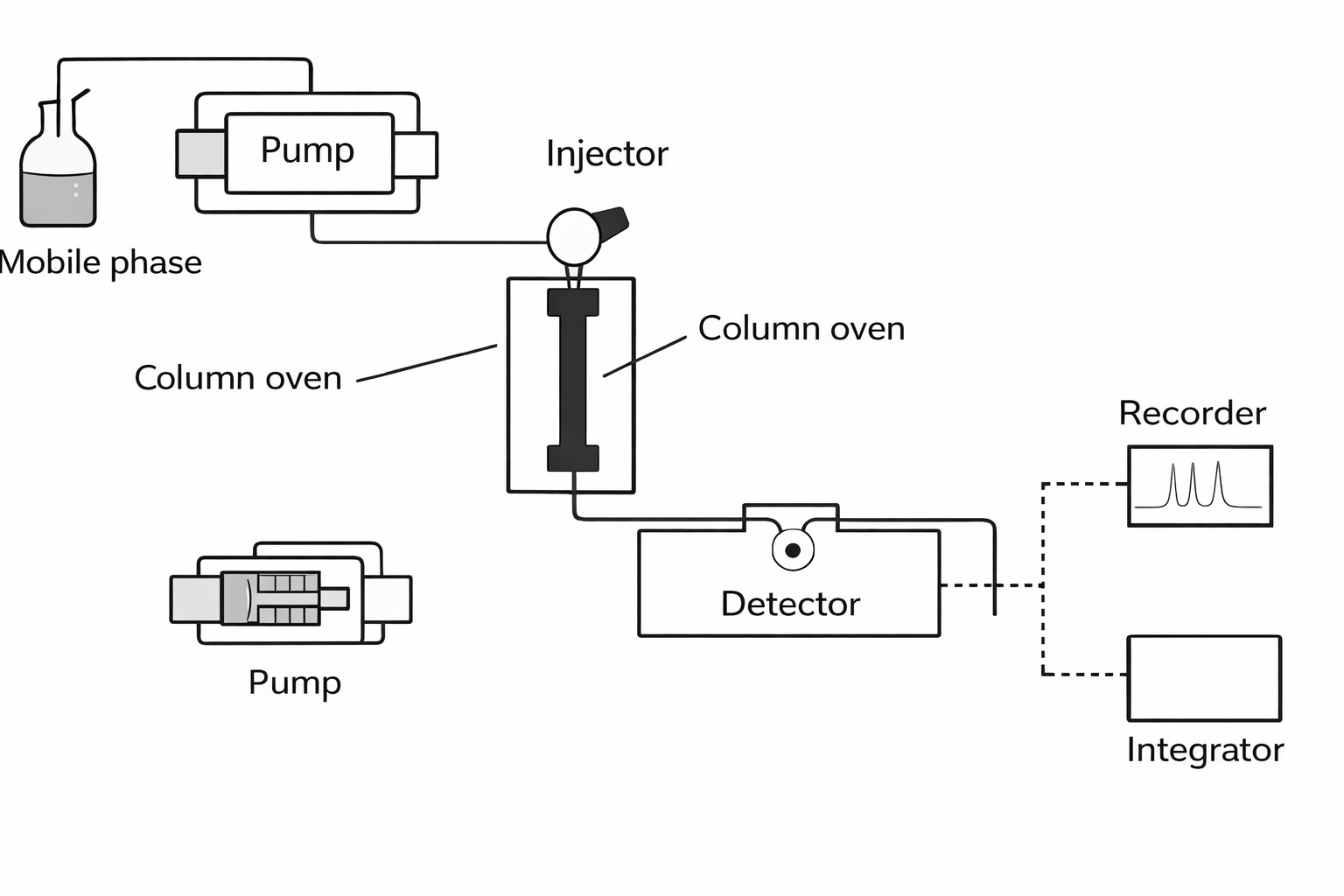
In this case, a small volume of liquid sample is injected into a tube called a column, which is filled with micrometric particles (known as the stationary phase). The individual components of the sample are carried through the column by a liquid (known as the mobile phase) under the high pressure supplied by a pump.
During their movement through the column, the components undergo physical and/or chemical interactions with the microparticles that make up the column, leading to their separation. Afterward, the separated components are detected at the outlet by a detector that generates a signal called a chromatogram.
In the chromatogram, the chromatographic peaks corresponding to each separated component can be distinguished, with the signal represented as a function of time after injection. Each HPLC analysis typically takes between 10 and 30 minutes.
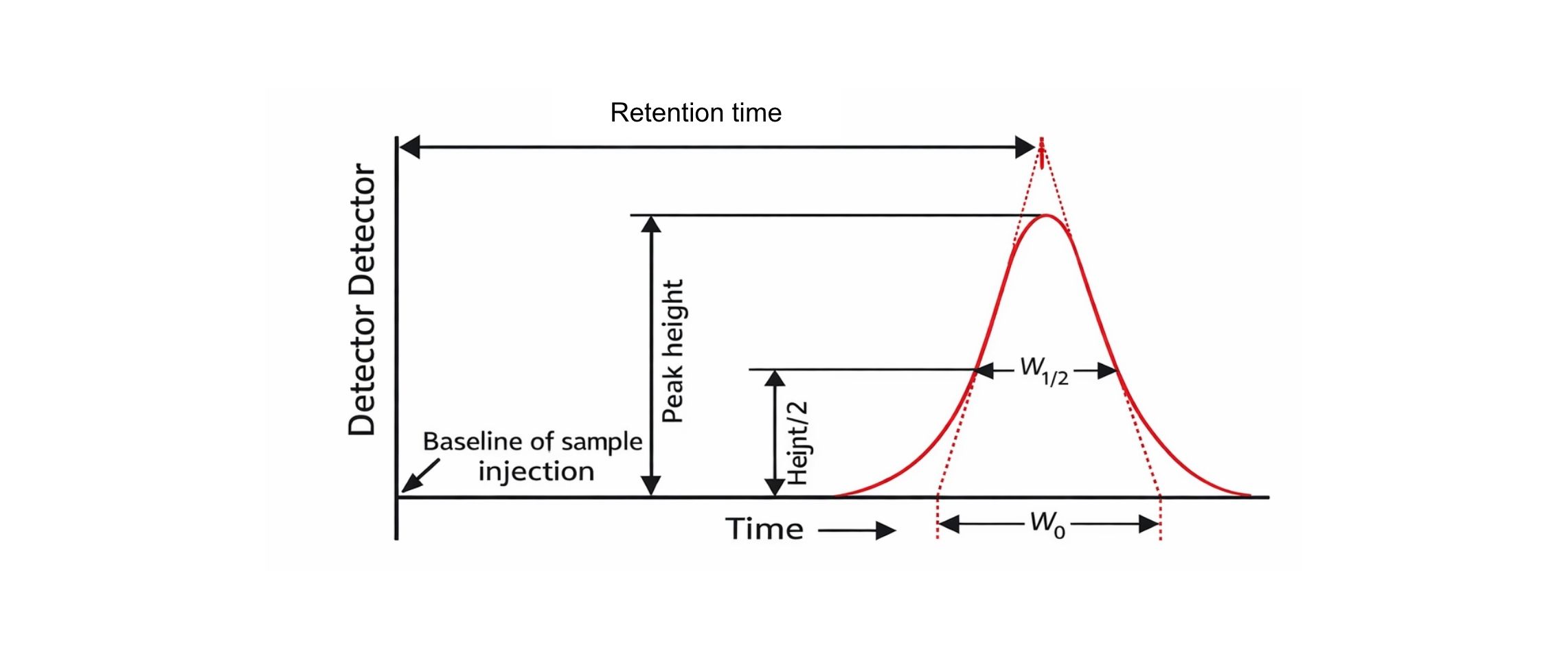
The key aspect of HPLC is the separation of the sample components. For this to occur, the sample must interact with the microparticles that make up the column. As a result of these physical or chemical interactions, separation is achieved.
Due to its importance, different separation modes have been developed. The most commonly used for the majority of compounds are:
As mentioned, HPLC analysis is a powerful analytical tool that provides valuable information about complex mixtures, regardless of their nature.
Some of its most important applications include:
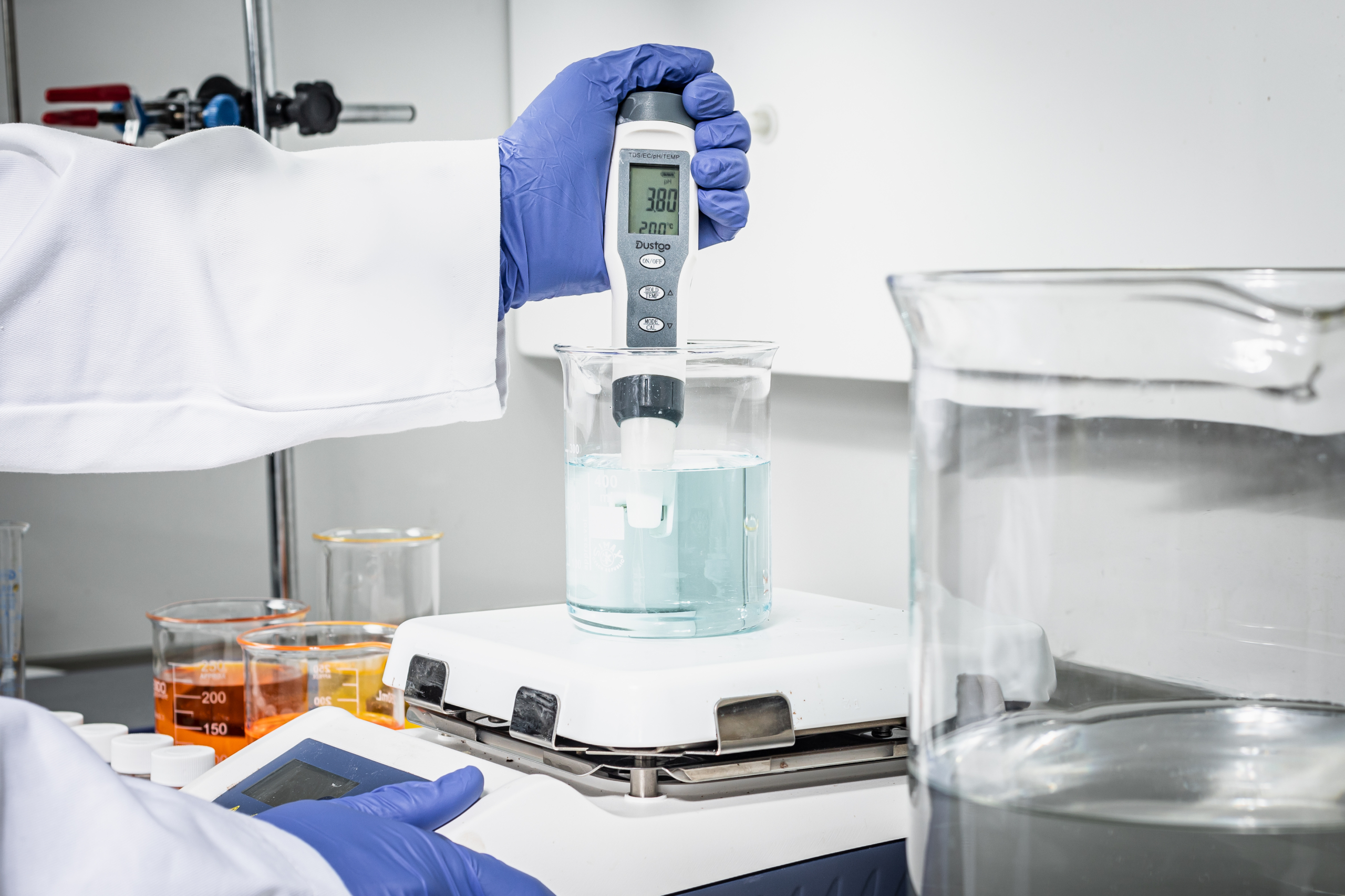
Quantitative and qualitative analysis of complex mixtures. HPLC allows the separation and analysis of components in complex mixtures, identifying each compound individually and accurately quantifying its concentration. This is especially useful in pharmaceuticals, food analysis, and environmental samples.
Trace detection. Thanks to its high sensitivity, HPLC can detect even minute amounts of substances, enabling the identification of contaminants, impurities, or metabolites that might go unnoticed with other techniques.
Automation. Modern HPLC systems allow automation of sample injection, elution, and data acquisition, increasing reproducibility and reducing the possibility of human error.
High sensitivity and precision. By combining high-efficiency columns with advanced detectors, HPLC provides highly precise and reproducible results, even for compounds that are difficult to analyze, ensuring reliable measurements.
At ATRIA, we are aware of the potential of HPLC for the analysis of complex mixtures. It also plays a key role in quality control of industrial processes, where the presence of contaminants could reduce the market value of a product.
For this reason, ATRIA has a team of technical professionals capable of developing the best HPLC methodology for each case. From literature review of analytical procedures to troubleshooting product anomalies, ATRIA offers a wide range of high-value analytical tools such as HPLC.
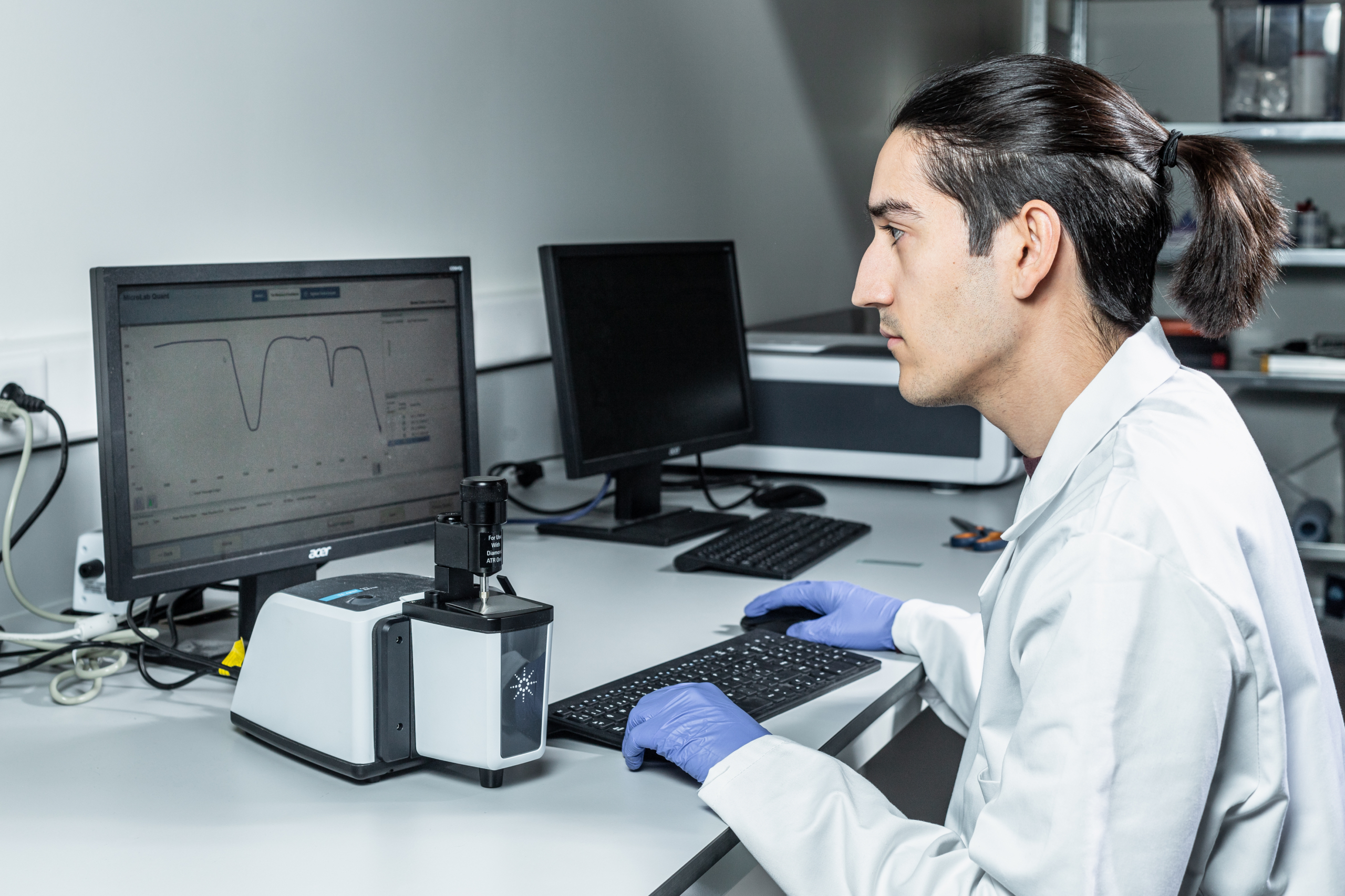
Would you like to carry out HPLC in one of your projects? Contact us!

Your success is our goal. We want to be your partner in the development of your projects, leveraging the power of innovation, flexibility, and the trust we provide. Together, we make a difference through new technologies.
Contact us and let’s build the future together!