Technologies
10 March 2026
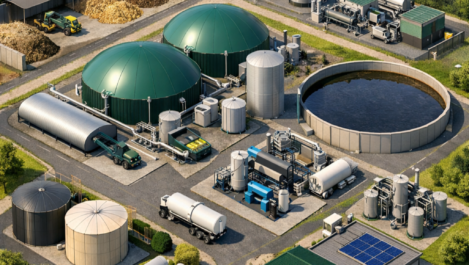
Biogas analysis, key parameters and examples
In today’s post, we explain in detail the analysis of biogas samples carried out by ATRIA.

At ATRIA we carry out climate chamber testing in many of our projects. It allows us to accelerate the environmental aging that a material or product suffers during its useful life.
At ATRIA we carry out climate chamber testing in many of our projects. It allows us to accelerate the environmental aging that a material or product suffers during its useful life.
At ATRIA we carry out climate chamber testing in many of our projects. It allows us to accelerate the environmental aging that a material or product suffers during its useful life.
At ATRIA we carry out climate chamber testing in many of our projects. It allows us to accelerate the environmental aging that a material or product suffers during its useful life.
At ATRIA we carry out climate chamber testing in many of our projects. It allows us to accelerate the environmental aging that a material or product suffers during its useful life.
At ATRIA we carry out climate chamber testing in many of our projects. It allows us to accelerate the environmental aging that a material or product suffers during its useful life.
At ATRIA we carry out Climatic chamber test in many of our projects. It allows us to accelerate the environmental aging that a material or product suffers during its useful life.
When a new product is about to be released to the market, it must have previously passed certain tests to ensure its performance will be satisfactory. A significant part of these tests involves evaluating how environmental conditions will affect the product. For example, the design of a product might need to change depending on whether it will be in a desert during summer or on top of a mountain in winter. For this reason, there are environmental tests that simulate controlled and accelerated conditions like humidity, temperature, light exposure, corrosion exposure, and many others.
At ATRIA, we perform climatic chamber tests to evaluate the behavior of materials and products under different environmental conditions. We simulate temperature and humidity variations to check their resistance and durability. If you need to validate the performance of your materials in specific environments, contact us!
Parameters Controlled in a Climate Chamber Test
Climate chamber tests primarily control two parameters: humidity and temperature.


To conduct tests in a climate chamber, the first thing to know is the type of piece we want to test. Depending on its dimensions, the possibility of movement during the test, and the complexity of its geometry, the number and distribution of pieces inside the chamber will be determined.
Once it is determined that the piece or pieces we want to test fit into the climate chamber, the next step is to know the environmental conditions we want to reproduce. In this case, various scenarios can be presented:
According to time:


According to periodicity:


It is important to note that in many cases, humidity cannot be adequately regulated at temperatures below 0°C due to ice formation.


The range of materials and pieces that can be tested in a climate chamber is very wide and varied. The main restrictions that may arise are due to size and weight exceeding the chamber’s capacity or the material or piece being harmful to the integrity of the chamber itself.
Any material or piece that will be exposed to the outdoors should first be tested in a climate chamber to ensure that it will not degrade in any way during its lifespan due to climatic conditions.
For plastic materials, it is highly recommended to carry out climate chamber tests since they are less stable with temperature than metallic and ceramic materials. Additionally, some plastics have hygroscopic properties (i.e., they absorb water), so their properties can also depend on the level of humidity they are exposed to.
 On the other hand, metals are good conductors of heat, so they undergo expansion and contraction with temperature variation. If it is necessary to check the buckling of flat pieces with temperature increase or dimensional stability after certain temperature change cycles, it is advisable to perform climate chamber tests on them. Likewise, some metals may suffer corrosion and oxidation under certain humidity conditions, so it is highly recommended to conduct these tests if they will be exposed to high levels of humidity.
Want to carry out climate chamber tests in one of your projects? Contact us!

Your success is our goal. We want to be your partner in the development of your projects, leveraging the power of innovation, flexibility, and the trust we provide. Together, we make a difference through new technologies.
Contact us and let’s build the future together!