Technologies
10 March 2026
Biogas analysis, key parameters and examples
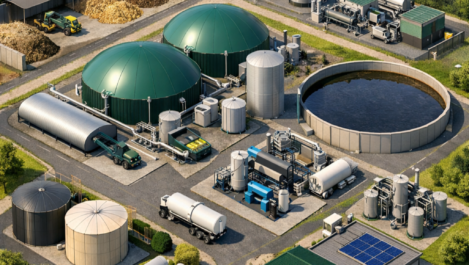
In today’s post, we explain in detail the analysis of biogas samples carried out by ATRIA.

In this blog, we will discuss the significant transformations that can be achieved on the surface of polyamide, a versatile polymer, and how these modifications affect its behavior.
Materials engineering is a constantly evolving discipline that seeks to modify the surface properties of materials to adapt them to specific applications. One of the most interesting and useful advances that ATRIA has developed is the conversion of a polyamide surface into a superhydrophobic surface through the use of a coating or hydrophilic through flame activation of the surface.
At ATRIA, we study the change in behavior on the surface of polyamide to improve its properties and performance in various applications. Using advanced techniques, we analyze how factors such as surface treatment affect adhesion, durability, and resistance of the material. If you need to optimize the properties of polyamide, Contact us!
Polyamide, from a chemical point of view, is a synthetic polymer belonging to a class of polymers called “amide polymers”. These polymers are formed by the repetition of structural units containing amide functional groups in their main chain.
The basic structural unit of polyamide is a molecule containing an amide functional group (CONH) in its structure. Amide bonds (also known as peptide bonds) connect these structural units, forming long chains. These amide bonds are formed by the reaction between a carboxylic acid functional group (COOH) and an amine functional group (NH2), resulting in the CONH structure in the polymer chain.
It is widely used in a variety of applications, from textiles to mechanical components. Its versatility is due to its unique properties, which include tensile strength, durability and flexibility. However, in its natural state, polyamide is not inherently hydrophobic. This means that it has an affinity for water and tends to absorb rather than repel it. Its degree of hydrophilicity is moderate and can be modified to higher degrees of hydrophilicity.

The application of a hydrophobic coating to the polyamide surface converts this material into one that repels water and other liquids, known as hydrophobic behavior. This surface modification is essential in applications where the aim is to prevent the absorption of liquids and keep the surface dry.
A coating is a thin layer of material applied to a surface for the purpose of altering its surface properties. In the context of turning a polyamide surface into a superhydrophobic surface, the coating used is usually hydrophobic. This means that it repels water and drastically changes the way the surface interacts with it. The coating adheres to the surface of the polyamide and creates a barrier that prevents water from touching it directly.

The hydrophobic coating selected must have chemical properties that make it water repellent. Generally, these coatings contain hydrophobic functional groups, such as alkyl (CH3), fluorinated (CF3), or siliconized (Si(CH3)3) groups. These groups are known for their ability to repel water due to their non-polar nature and low surface energy.
For example, the adhesion of a siliconized coating to a polyamide surface involves a chemical interaction between the functional groups present on the polyamide surface and the functional groups of the coating. The functional groups of the silicone coatings are often silanol (Si-OH) groups that can react with the functional groups present on the surface of the polyamide, which generally include amide (CONH) and alkyl (CH3) groups.
Once the silicone coating is in contact with the polyamide surface, the chemical reaction between the functional groups begins. The silanol (Si-OH) groups in the coating can react with the amide (CONH) and alkyl (CH3) groups on the surface of the polyamide. This can involve the formation of chemical bonds, such as siloxane-type bonds (Si-O-Si), which firmly anchor the coating to the surface.
Once applied, the coating cures or hardens, which ensures that it effectively adheres to the polyimide surface. This process changes the surface topography of the polyamide and often introduces micro- or nanostructured features that contribute to hydrophobicity.

Converting a polyamide surface into a superhydrophobic surface has multiple advantages and applications. Firstly, this can significantly increase the durability of materials, as it prevents water absorption that could cause degradation or corrosion. Furthermore, in textile applications, such as the manufacture of water-repellent sportswear, the superhydrophobic effect can keep wearers dry and comfortable in wet conditions.
In the industrial field, superhydrophobic surfaces can be used in the manufacture of electrical and electronic components to prevent short circuits caused by moisture. They are also ideal in applications where efficient liquid management is needed, such as chemical handling in laboratories or medical device manufacturing.

Although hydrophobic coatings offer numerous advantages, they also present challenges and limitations. One of the main challenges is long-term durability. Over time and with exposure to environmental factors such as abrasion and UV radiation, hydrophobic coatings can degrade, requiring periodic reapplication.
In addition, it is essential to consider the compatibility of the coating with the base material. In some cases, the bond between the coating and the polyamide may not be strong enough, which could lead to premature detachment or failure. In these cases, prior surface activation would be performed to lower the surface tension and thus improve the adhesion of the coating.

Surface activation transforms polyamide, an initially moderately hydrophilic material, into one with superhydrophilic behavior, which means it attracts better and behaves favorably in the presence of aqueous liquids. This surface modification broadens its applications in industries such as medicine and filtration.
Surface modification of polyamide to make it hydrophilic through the use of a flame involves a chemical process that selectively alters the surface of the polymer without changing its internal chemical composition. Activation of the polyamide surface is a fundamental process in materials engineering that transforms an originally hydrophobic or moderately hydrophilic surface into a superhydrophilic surface.

Before carrying out the modification, it is important to prepare the surface of the polyamide. This includes the removal of impurities, contaminants and dirt that may interfere with the modification process. The surface must be clean and free of any substances that hinder the adhesion of the hydrophilic functional groups.
After exposure to the flame, the treated surface cools and the chemical modifications introduced in the surface layer are consolidated. This strengthens the new chemical interactions on the polyamide surface and ensures that the hydrophilic properties are effectively maintained.
The result of the modification of the polyamide surface by a controlled flame is a transformation of an originally hydrophobic or moderately hydrophilic surface into a super hydrophilic surface.
Converting a polyimide surface to a hydrophilic surface through flame modification offers significant advantages in a variety of applications. For example, in the medical industry, hydrophilic surfaces are essential to ensure the ability of medical devices to interact effectively with biological fluids, such as blood or intravenous solutions. They are also used in the manufacture of water filtration membranes, where the ability to attract water is crucial to membrane performance.
It is important to note that the modification of the polyamide surface by flame must be carried out in a controlled manner to avoid damage to the internal structure of the polymer and to ensure the effectiveness of the hydrophilic properties obtained.

Despite its advantages, flame activation has certain limitations. One of these is long-term durability. Surface modification by flame can be sensitive to environmental factors, which may require periodic maintenance or reapplication.
In addition, it is critical to consider the compatibility of the flame with the polyimide and other materials with which it may come in contact. Effective adhesion to the polyamide surface is essential to ensure sustainable hydrophilic behavior.

Do you want to apply polyamide surfaces in any of your projects? Contact us!

Your success is our goal. We want to be your partner in the development of your projects, leveraging the power of innovation, flexibility, and the trust we provide. Together, we make a difference through new technologies.
Contact us and let’s build the future together!