
News
17 March 2026
Technology in the Winter Olympic Games
In this article, we explore how technology and materials engineering influence athlete performance in the Winter Olympic Games.

Not so long ago, it seemed totally futuristic to us not having to physically drive for our car to get us from point A to point B without having to take control, but that day is closer than we think.
In today’s blog we tell you what an autonomous car is, what technologies make the car autonomous, what is the classification they have according to their level of autonomy and the current models that incorporate these technologies. Let’s start? Or rather “Start KITT”.
An autonomous car is one that, with a series of sensors and computer logic, is capable of interpreting the world around it and driving through it as a human would do without your intervention or with your partial assistance. These sensors allow obtaining information on the location of other vehicles, their position, the distance and the lane in which they are traveling. This, together with GPS information and sufficiently accurate maps, indicate to the car its situation and the elements around it at all times. In some cases, it also allows adaptation to weather conditions.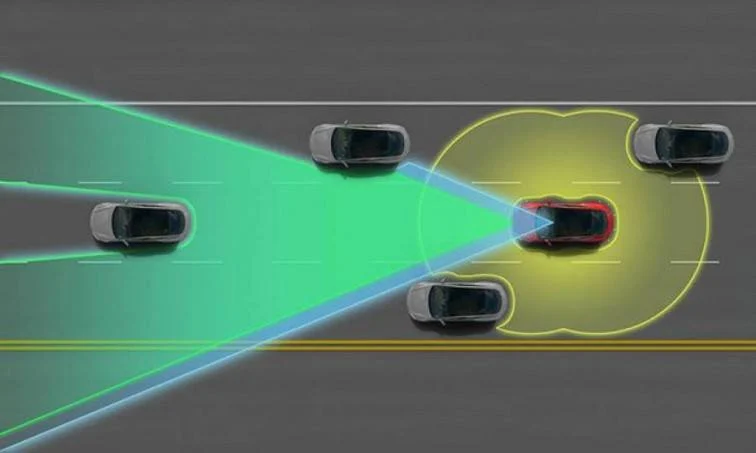
Different technologies are being used for the development of autonomous cars. We explain the most used:
For example, navigation through cameras located around the vehicle used by Tesla. This autonomous driving system is based on a combination of 8 cameras, 12 support ultrasound sensors and a forward radar. Overall, the car is able to “see” the environment and interpret it as a person would, but with superior reflections.Another system that companies such as Google, Ford, Toyota / Lexus, Nissan or Volkswagen are using is LIDAR. The LIDAR is a rotating laser beam emitter, which is usually located on the roof of the vehicles and which is responsible for reconstructing the environment 360 degrees around the vehicle. Through this emission of rays and their reflection, it is able to create a digital map of the obstacles within its reach, and together with support sensors such as the previous case (ultrasound, radars) it interpresses and acts in sequence.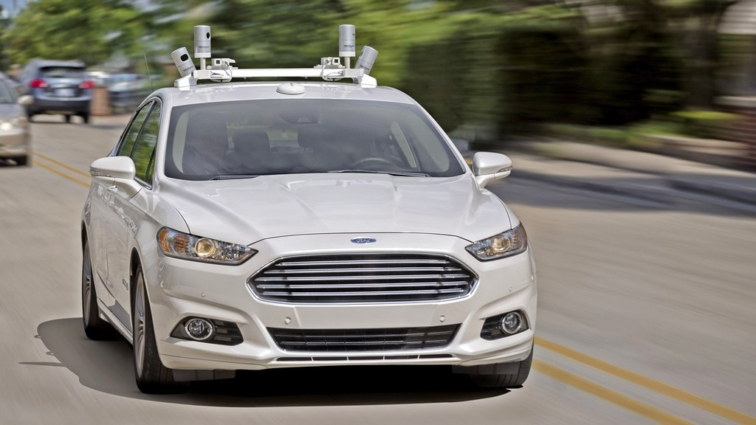 Apart from the main systems that have been mentioned (camera, LIDAR), assistive technologies are also used that are used to improve the information captured, other types of signals that provide a complete assessment of the environment.
These technologies are the ultrasound sensors used for short distances, but due to their low cost, they allow to have a perimeter sensor not only for the navigation of the vehicles, but for the safety in the parking of these.
Another widespread system is radars, which, unlike LIDARs, emit radio waves that bounce off objects and tend to work better in adverse weather conditions.
Autonomous cars are classified according to their level of autonomy, that is, the degree of independence that the car has with respect to the driver.
The first classification in this sense was established by NHTSA in 2013, the US transportation safety agency, through a scale of 0 to 4.
As systems have evolved, new classifications and ways of evaluating them emerged, until the current method that is used in practically all cases, and the most widespread, has been reached. We are talking about the SAE J3016 standard, the last revision of which took place in 2016.
This classification tries to group all those that have emerged in the different countries, giving recommended evaluation guides, but that each brand can use or not according to their interests.
This guide establishes 6 levels of autonomous driving, ranging from 0 to 5. These levels only establish the minimum capacity that the vehicle must have to reach each of the levels, and the functions that it must automate.
We can find more and more autonomous car models on the market, with different degrees of autonomy. Within the classification provided above, we can find cases of vehicles of different levels.
At level 0, almost all the existing models on the market, both economic and old, which do not have any assistance and require 100% action from the driver. Also included in this group are those with assists such as emergency braking or lane or speed keeping.
If these vehicles add the adaptive cruise control function, we would be talking about level 1, since it is capable of maintaining the distance to the preceding vehicle automatically. Also included are those that incorporate the assisted parking capacity if it only acts on the turning of the wheels. In this category there are also a large number of vehicles on the market.
At level 2 there are fewer models contained in this category. They are systems oriented to use on the motorway, much more elaborate that allow automatic reaction to traffic conditions, which can even stop in traffic jams.
The most representative brands with systems of this nature could be Mercedes-Benz (Drive Pilot), Nissan (ProPilot) , Volvo (Pilot Assist), Audi or BMW . Finally, if the parking aid system additionally controls the throttle, they are also included in this level.
In level 3 of autonomous driving, the cases of brands or models that incorporate it are discrete. The best known is Tesla with its Autopilot, that allows you to predict traffic conditions on the road and even change lanes to overtake without driver intervention, without limiting its functionality to motorways.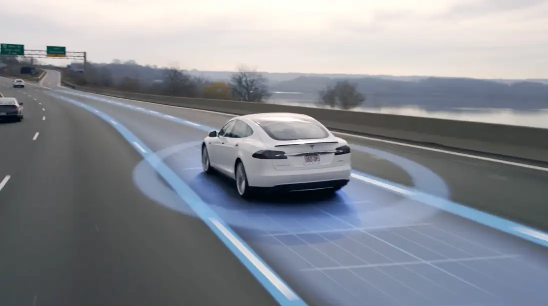 For level 4 autonomy it is extremely difficult to find commercial models, since, although many of them are under development, they are not yet commercialized. The most important is that of Google, which has accumulated many kilometers driving autonomously and is increasingly closer to being a reality.
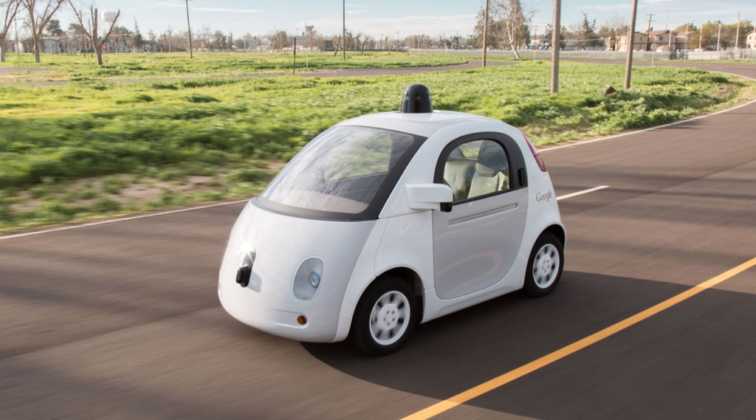 As in the previous case, there are only prototypes of vehicles with level 5, and the most advanced is again that of Google. There is a variant of this model without a steering wheel or pedals, which has been tested for short tours and in ideal conditions.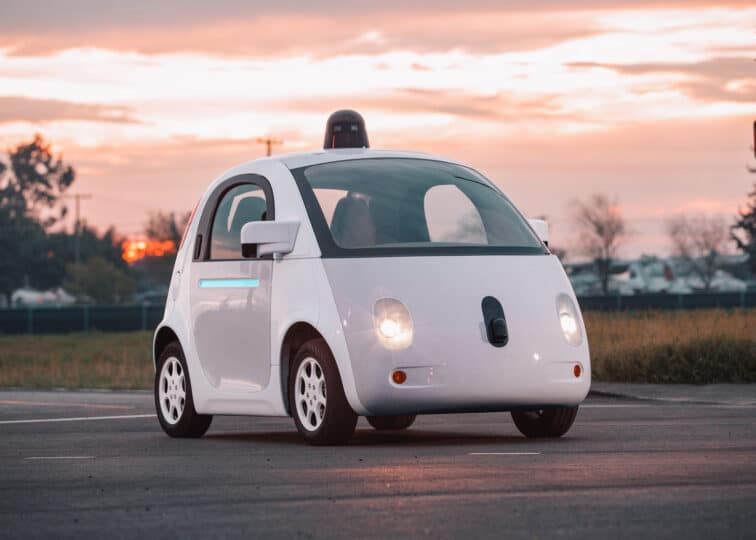
It is difficult to forecast how the evolution of these systems will advance, since each brand shares their horizons in a very ethereal way. What is clear is that the implementation of autonomous driving has to go hand in hand with an awareness of drivers, to avoid accidents because the driver is not attentive to possible events.
Now, it is expected that by 2025 the vast majority of models with up to level 3 autonomy will be released, which would help lay the foundations for the new legislation that has to go hand in hand with these advances.
Since this summer the UN has signed a regulation to limit the use of level 4 and 5 autonomous vehicles and prevent them from operating near pedestrians. According to this document, for now these systems (level 4 and 5) can only be activated on roads where pedestrians, cyclists or similar traffic is not allowed.
There must also be a physical separation between directions of movement, with a speed limited to 60km / h. Finally, it will be mandatory that all passengers are correctly seated and with their seat belt fastened.
Do you want to implement AGVs in any of your Projects? Contact us!

Your success is our goal. We want to be your partner in the development of your projects, leveraging the power of innovation, flexibility, and the trust we provide. Together, we make a difference through new technologies.
Contact us and let’s build the future together!